


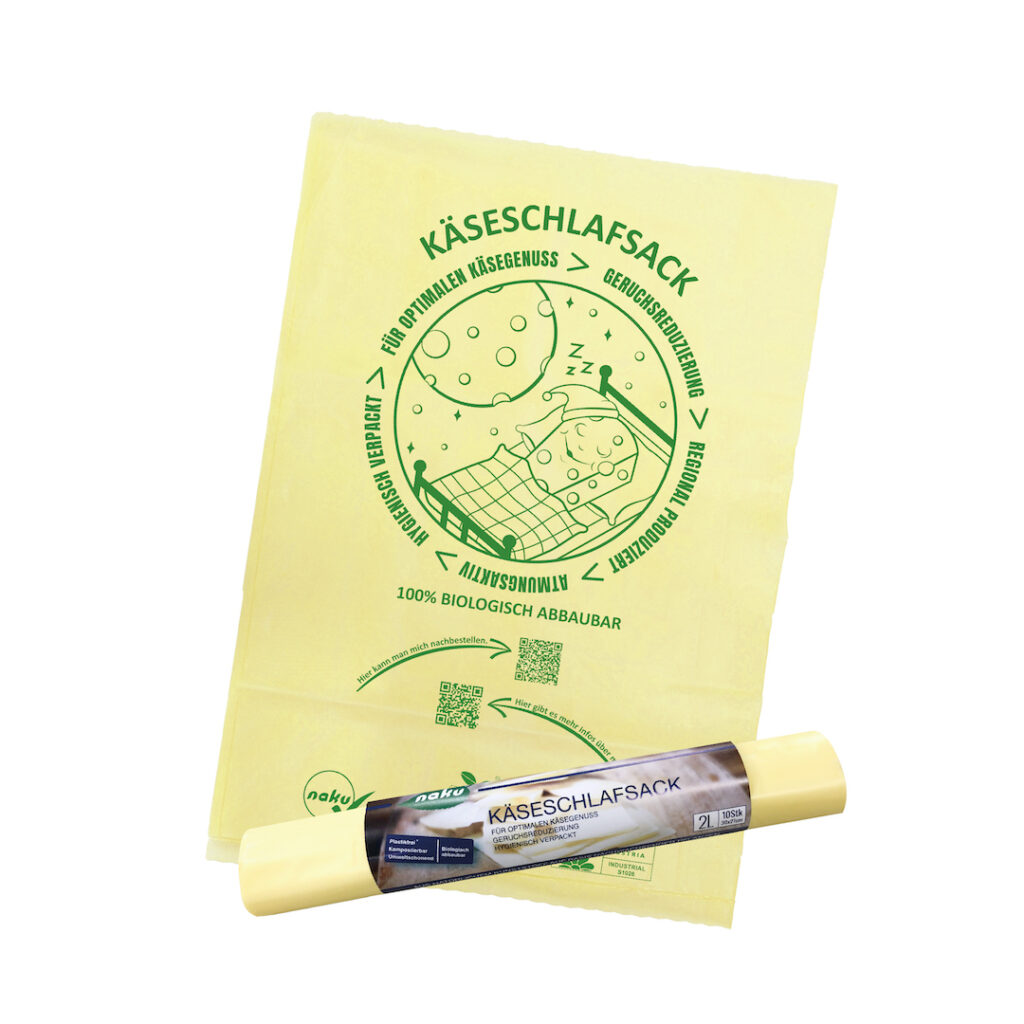
NaKu cheese sleeping bag made of bioplastics - the cheese bag for optimal cheese enjoyment
The sustainable alternative for cheese storage – breathable, compostable, and made from non-GMO cornstarch. For optimal cheese enjoyment without plastic.
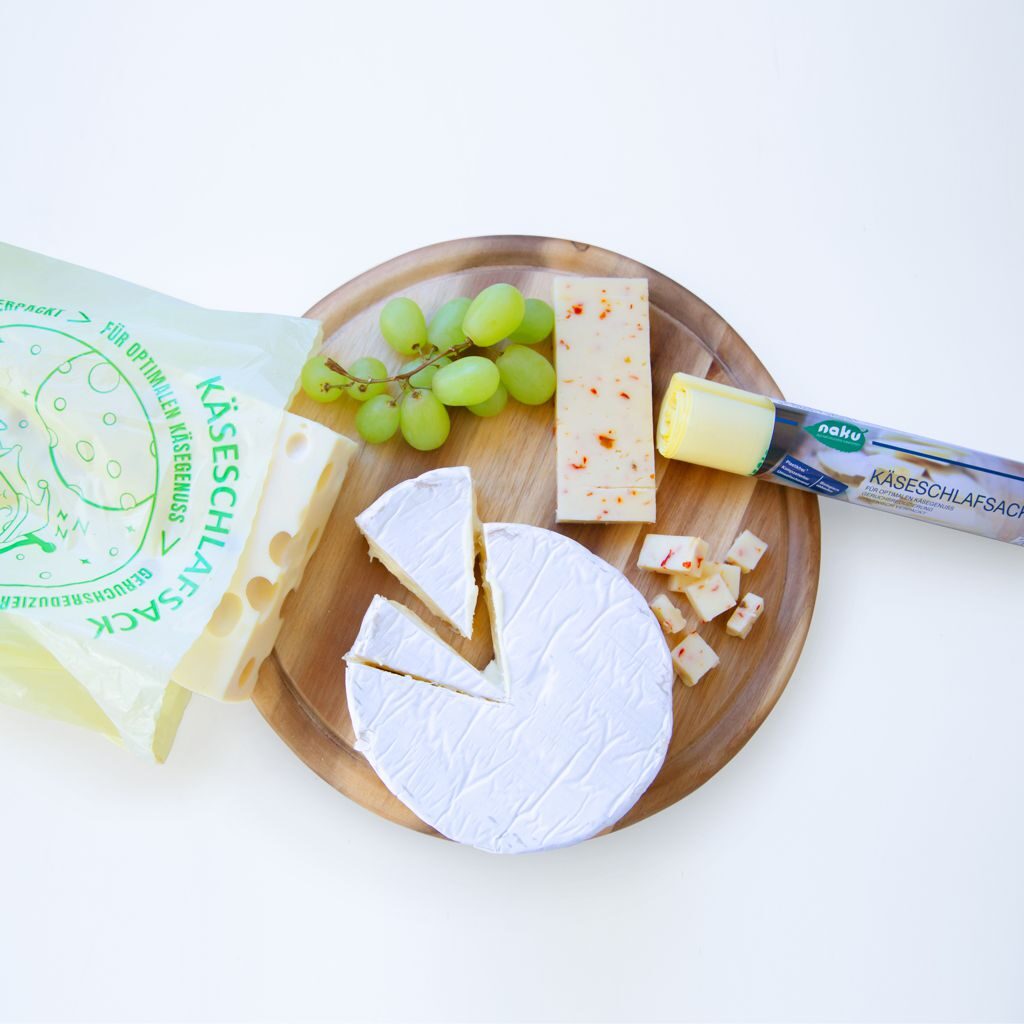
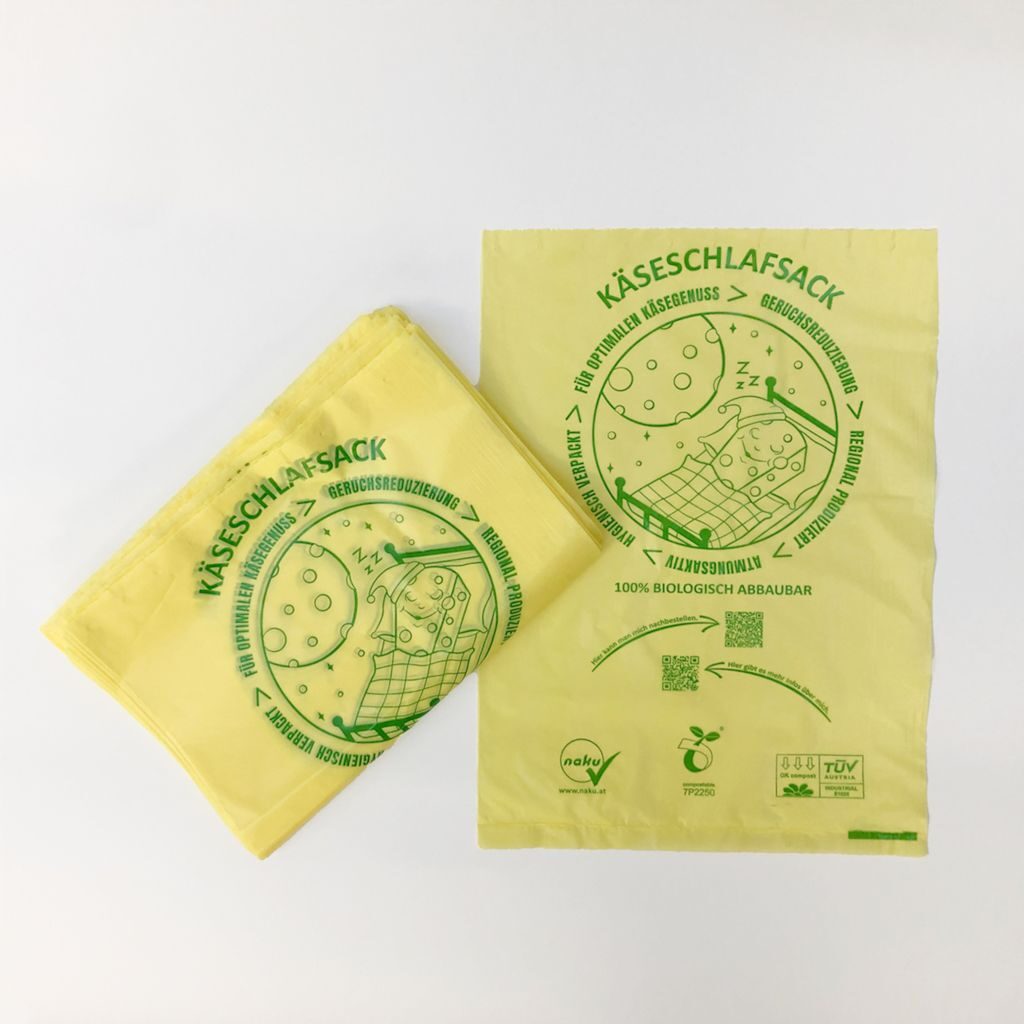
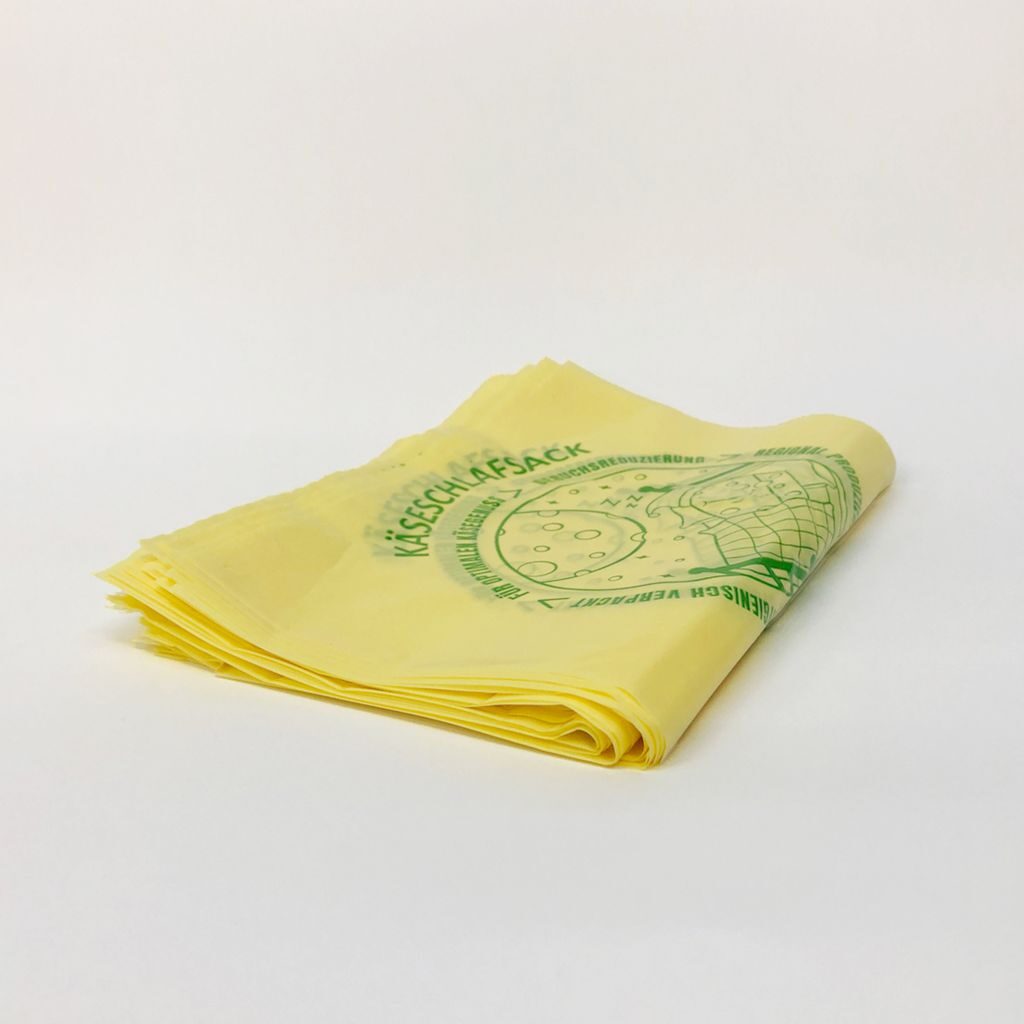
The NaKu cheese sleeping bag is the ideal cheese bag for your kitchen. Made from corn-based bioplastic, this breathable and water-resistant cheese sleeping bag preserves the cheese's aroma, helps keep cheese fresh longer , and reduces odors in your refrigerator. Thanks to its bright yellow design and writable surface, you'll always have a clear overview of your cheese supply.
Compostable and environmentally friendly
The NaKu cheese sleeping bag is made from natural bioplastic based on non-GMO cornstarch from European agriculture. As a plastic-free cheese bag , it decomposes in compost within a few weeks according to DIN EN 13432 – completely without any lasting microplastics. Thus, each cheese sleeping bag makes a valuable contribution to reducing CO2 emissions.
Social commitment: Production in St. Pölten
NaKu cheese sleeping bags are made in a day center for people with disabilities in St. Pölten – a long-standing and enthusiastic partnership. By purchasing a NaKu cheese sleeping bag, you are therefore not only supporting the environment through sustainable cheese storage, but also social inclusion.
► Preserves the freshness of cheese
► Preserves the cheese aroma - optimal cheese enjoyment
► Compostable - 100% biodegradable
► Environmentally friendly
► Can be written on over the entire surface


Dimensions:
30 21 cm x cm
Capacity: 2 liter
Thickness: 25µm
Material: bioplastic OK Compost Home
Item No.: R-KS006
Packaging for your cheese counter
The NaKu cheese sleeping bag is also available as loose packaging in packs of 100 – ideal for packaging cheese directly at your cheese counter.
Your advantages with the NaKu cheese sleeping bag
Fresh cheese: Preserves the cheese aroma and helps
Keeps cheese fresher for longer. Odor-reducing: Prevents odor transfer in the refrigerator.
Compostable cheese bags: Decomposes in compost according to DIN EN 13432
Cheese bags without plastic: No persistent microplastics
Writable: Full surface writable thanks to light yellow design
Sustainable cheese storage: Made from non-GMO cornstarch from European agriculture
Social: Produced in the day care center for people with disabilities in St. Pölten
Customer reviews of the NaKu cheese sleeping bag
★★★★★ Read the opinions about the NaKu cheese sleeping bag here – and see for yourself!
► Optimal storage of cheese
► Preserves the cheese aroma
► Odor reducing
► Reusable, multiple uses
► The alternative to conventional products
► Bioplastic material is 100% biodegradable
For over 15 years, we have been your Austrian partner for sustainable cheese bags made from bioplastics for cheese dairies and specialized cheese retailers. Our organic cheese bags are made from renewable raw materials, are free from harmful substances, and compostable without permanent microplastics. From tried-and-tested standard sizes to customized solutions, we offer environmentally friendly alternatives for hygienic, breathable, and plastic-free cheese storage – ideal for households, delicatessens, and direct marketing.


FAQ – Frequently Asked Questions about the NaKu Cheese Bag
Our cheese bag is breathable and water-resistant . It was specially designed to preserve the aroma and protect the cheese from drying out or mold, allowing for longer enjoyment.
It is made from bioplastic based on cornstarch , is 100% compostable , and decomposes within a few weeks. This prevents the formation of permanent microplastics and reduces CO2 emissions compared to conventional petroleum-based products.
The cheese bags are available in a practical size with a capacity of approximately two liters. For households, they come in handy rolls of 10. For cheese dairies and specialty cheese retailers, they are also available loose in packs of 100.
The light yellow surface of the cheese storage bags is fully writable . This allows you to easily label the contents and use the bags as hygienic and attractive packaging for your cheese specialties.
Yes, NaKu offers tailor-made solutions to realize individual packaging projects made of bioplastics in cooperation with cheese dairies, cheese retailers or the trade.
The optimal storage of cheese
Storing cheese is an art that requires a combination of knowing the type of cheese, the right temperature and humidity, and choosing the right container. Here is some information and tips for storing cheese optimally.
The optimum temperature for storing cheese
Most cheeses should be stored at a cool temperature between 4 and 12 degrees Celsius for optimal flavor and texture. Too cold or too warm can affect texture and flavor. As a rule, cheese should be kept on the lowest shelf in the refrigerator to ensure a constant temperature.
The optimal humidity when storing cheese
Humidity is also an important factor in cheese storage. Most cheeses require relative humidity of around 85 to 90 percent. Too little moisture can cause the cheese to dry out and lose flavor and texture. Too much moisture can cause mold to form or the cheese to become slimy. A container with a lid or foil can help regulate moisture.
Optimal air circulation when storing cheese
Cheese should be stored in a room with adequate air circulation. A refrigerator or pantry is often the best place. Cheese left in a plastic wrap or airtight container for too long can lose its aroma and flavor.
The different types of cheese
There are many different types of cheese, and each type of cheese has different storage and preservation requirements. Fresh cheeses like ricotta or cream cheese should be consumed within a few days of purchase. Hard cheeses like cheddar or parmesan can be stored longer if stored properly.
The length of time when storing cheese
Cheese storage times vary depending on the type of cheese and how it is stored. Fresh cheeses should be eaten within a few days. Soft cheeses should be consumed within 1-2 weeks, while hard cheeses can be stored for up to a month or more.
Mold formation when storing cheese
If mold develops on cheese, it doesn't necessarily have to be thrown away. Hard cheeses can easily be sliced to remove the mold, while soft cheeses may need to be discarded. However, if the mold has spread to the entire cheese or there is an unpleasant odor, the cheese should be discarded.
Recycling and the circular economy are crucial for our future. We are frequently asked how renewable and recyclable materials are handled in the recycling process, or how a recycling process can actually work. Watch our video to learn more about the recycling process using the example of biodegradable bags.
Request a quote or contact us now

Your personal contact
Do you have further questions about our products or about the individual printing of the environmentally friendly NaKu bags, about the individual labeling of the NaKu bottles, about special projects or do you need an offer for large quantities?
Lizzy Weinert is looking forward to hearing from you:
E-Mail: office@naku.at
Tel: +43(0)660 551 7789
(weekdays Mon – Thu from 09:00 – 16:00 and Fri from 09:00 – 14:00)