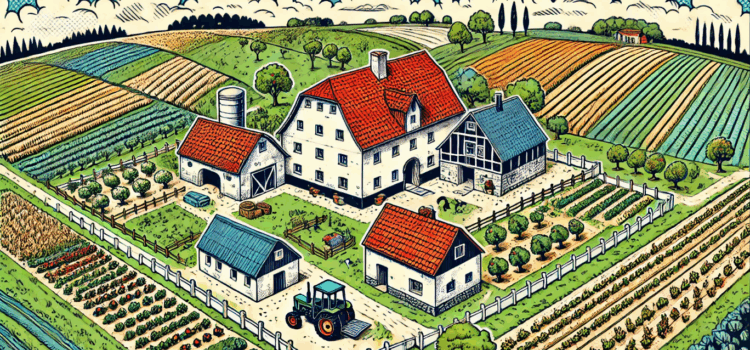
From field to packaging: How organic farms can become even more sustainable
How bioeconomy and circular economy make organic farms future-proof
Organic farms are rightly considered pioneers in environmental protection and sustainable agriculture. The principle of the circular economy has always been firmly established here. But responsibility for the environment doesn't end at the farm gate. In light of global challenges such as food waste, plastic pollution, and resource scarcity, organic farmers and retailers must continuously seek innovative ways to optimize their processes and seamlessly close the sustainability chain all the way to the end consumer.
This requires a holistic approach, ranging from soil health to modern packaging solutions based on the principles of the bioeconomy.
The circular economy at the heart of organic farms
Organic farming fundamentally operates in harmony with nature. Waste from one process becomes a resource for the next. This manifests itself in several key areas:
Soil health and nutrient cycle
Healthy soils are the foundation. Organic farms utilize a well-planned crop rotation and rely on natural nitrogen inputs into the soil. This eliminates the need for energy-intensive, synthetic nitrogen fertilizers and simultaneously protects the climate and water resources. Animal husbandry also contributes to closing the nutrient cycle: liquid and solid manure are applied to the fields as high-quality, organic fertilizer.
Efficient operating resources and resource management
A key factor is minimizing external imports. Instead of transporting products over long distances, emphasis is placed on sourcing raw materials regionally . Furthermore, energy self-sufficiency is becoming a central focus.
Even for inputs outside of direct production, there are plant-based alternatives that support the circular economy concept. One example is NaKu barrier tape . This is made from plant-based materials and serves as a more environmentally friendly, renewable alternative for field barriers, marking sales areas, or designating cultivation zones.
Bioeconomy at the point of sale: Sustainability in bottles, cans and pouches
The circular economy must continue at the point of sale, especially when products are handed over to the customer. Here, innovative packaging solutions made from bioplastics offer a modern alternative to conventional materials.
- Freshness guarantee and less food waste: A key problem is the waste of fresh food. Special solutions help to extend its shelf life. For deliveries in organic boxes, for example, the organic insert bag for organic boxes (based on cornstarch) optimally prepares fruits and vegetables and demonstrably keeps them fresher for longer, which reduces return rates and food waste.
- Alternative filling of liquids: For bottled products such as cooking oils, milk, or juices, switching to bio-based materials is an important step. NaKu organic bottles and organic cans They are made from 100% natural, renewable raw materials (e.g., PLA/rPLA from plants or lactic acid). They are free of pollutants and plasticizers (such as BPA), up to 7% lighter than conventional plastics, and industrially compostable.
- Biodegradable bags as resale items: To close the loop at the customer's home, the NaKu Bio Bags for the Household than ideal Resale items Suitable for farm shops and organic retailers. This includes compostable products. Organic Fresh Storage Bag or Organic cheese bags/cheese sleeping bags, which ensure optimal storage and serve as practical, compostable organic waste bags after use.
Focus: The (organic) carrier bag as a statement of sustainability
The choice of carrier bag has high symbolic significance and is often the last impression the customer gets of a company's commitment to sustainability. Here, biodegradable carrier bags made from bioplastics are often the more ecologically sound alternative compared to single-use paper or conventional plastic bags.
Why biodegradable carrier bags are better:
- Moisture resistance and reusability: Unlike most paper carrier bags, NaKu Bio-Trage bags (lightweight) Moisture-resistant. They do not disintegrate in rain or condensation. Their robustness allows for more frequent reuse.
- Improved environmental footprint in production: Life cycle assessments show that producing paper carrier bags requires twice as much energy as producing plastic or bioplastic bags. Biodegradable carrier bags made from cornstarch, on the other hand, consume less energy and water and are based on rapidly renewable, non-GMO raw materials.
- Recycling and disposal security: The bags are compostable Compliant with DIN EN 13432 ("OK Compost Home"), these bags can be returned to the natural cycle after use (e.g., as compostable waste bags). They are free of harmful substances often found in recycled paper or conventional plastic.
| feature | Biodegradable carrier bag (NaKu, bioplastic) | Paper carrier bag (disposable) | Plastic bag (PE, disposable) | Cotton bag (reusable) |
| Raw material base | Renewable raw materials (cornstarch, plants) | Wood (cellulose) | Petroleum (fossil resource) | Cotton (renewable) |
| Energy consumption (production) | Low (lower than paper) | Very high (significantly higher than bioplastics) | Low | Extremely high (cultivation/processing) |
| Water/chemical requirements | Low | High (bleaching, processing) | Low | High (cultivation, if not organic) |
| moisture resistance | Excellent | Bad (tears easily) | Excellent | Expert |
| Shelf life function (freshness) | Good (keeps food fresh longer) | None | None | None |
| Biodegradability | Fully compostable (DIN EN 13432) | Good (but slow in nature) | Extremely bad (hundreds of years, microplastics) | Expert |
| Recommended usage | Single-use and reusable (until composting) | Only with a high recycling rate and multiple uses | Only makes sense as a reusable recycling bag | Multiple uses required |
Conclusion: Sustainability as a holistic concept for organic farms
For organic farms, sustainability is not a trend, but the foundation of their business. The path to even greater future viability lies in the consistent application of the circular economy in all areas. By combining traditional, resource-conserving cultivation methods (soil health, recyclable fertilizers) with modern, innovative solutions from the bioeconomy (packaging and transport-optimized products made from bioplastics), organic farms can further expand their pioneering role and offer customers a completely sustainable experience – from the field to the final environmentally friendly packaging.
FAQ – Frequently asked questions about holistic sustainability in organic farming
What does circular economy mean specifically for organic farms?
The circular economy in organic farming means minimizing waste and closing nutrient cycles. This is achieved, for example, through the natural binding of nitrogen (and the use of manure and slurry as high-quality fertilizer, thereby reducing external, energy-intensive inputs).
What role does the bioeconomy play in the context of organic farming?
The bioeconomy complements the circular economy by replacing fossil raw materials with renewable, bio-based resources. This applies primarily to packaging (e.g., bioplastics based on cornstarch) and other operating materials, in order to close the sustainability chain all the way to the end customer.
How do bio-based packaging solutions help reduce food waste?
Special organic packaging, such as reusable produce bags or liners for organic produce boxes, has been proven to keep food fresh for longer (e.g., through breathability). This extends the shelf life of fruits, vegetables, and bread, reducing food waste.
Are biodegradable carrier bags made from bioplastics really more environmentally friendly than paper carrier bags?
Yes, biodegradable carrier bags often have a better environmental footprint than paper carrier bags, as their production requires significantly less energy and water. Furthermore, they are moisture-resistant and, due to their robustness, can be reused multiple times.
Are the bioplastic products (packaging, carrier bags) fully compostable?
Yes, the compostable products (e.g., bags and carrier bags) are made of plant-based bioplastic and compost according to the European industrial standard DIN EN 13432. Many are also suitable for home composting ("OK Compost Home").
What advantages do biodegradable bottles and cans offer compared to conventional plastic containers?
Biodegradable bottles and containers (e.g., made from PLA/rPLA) are produced from 100% natural, renewable raw materials. They are free from harmful plasticizers (such as BPA) and are up to 7% lighter, which improves transport and reduces the carbon footprint.
Why should farm shops, organic farms or organic retailers offer biodegradable household bags as resale items?
The sale of biodegradable bags for household use (e.g., freezer bags, food storage bags, cheese bags, etc.) allows customers to continue the sustainability cycle at home. After storing food, the bags can be used as compostable waste bags.
Are there also plant-based alternatives for inputs that are not part of the packaging?
Yes, there are alternatives in the operational area as well. One example is plant-based barrier tape, which, unlike conventional plastic, represents a more environmentally friendly solution for demarcating fields or market stalls.
How can organic farms best guarantee the freshness of organic box deliveries?
Using special organic liner bags for organic produce boxes optimally preserves the freshness of fruits and vegetables. The cornstarch-based material is breathable, yet protects against moisture loss, thus extending the shelf life of the produce.
How do reusable cotton bags fare in a direct ecological comparison?
While cotton bags are reusable, they have a very high environmental impact due to the high water and energy consumption involved in their cultivation and production. They only become ecologically superior if they are reused very frequently.
Request a quote or contact us now