Shelf life of cooking oils: What happens when oil goes rancid?
A new study from the University of Vienna looks at the shelf life of cooking oils in different types of bottles
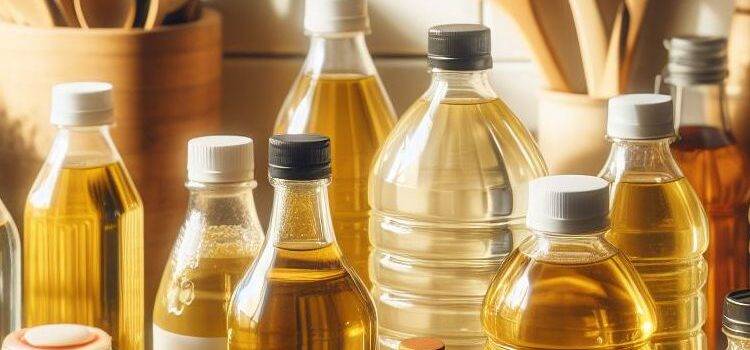
Researchers at the University of Vienna conducted a study to examine the shelf life of sunflower oil in various bottles, including testing the bio-based NaKu bottle.
We all know the pungent smell of rancid oil. We will now explain what happens to the oil when it goes bad and what is important to make oil last longer!
Oils consist largely of fatty acids, which can be either saturated or unsaturated. Unsaturated fatty acids such as omega-3 fatty acids are healthier than saturated fatty acids, but unfortunately they also have a significantly shorter shelf life. When these fat molecules are broken down, degradation products are formed, such as aldehydes, which produce the rancid smell and make the oil go “bad”. This degradation is significantly accelerated by two factors: light, which provides the energy necessary to split the molecules, and oxygen, which is necessary to form the degradation products. It is therefore essential to protect the oil as well as possible from these influences.
The result of the study on the shelf life of cooking oils
This brings us full circle to the NaKu bottles and the experiments at the University of Vienna. Although storing it in the dark and refrigerated is certainly an advantage, the bottle itself can also make a big contribution to the shelf life of the oil. The researchers have now filled various bottles with oil and measured how degradation products form over a certain period of time. The results of the study show that oil stored in NaKu bottles achieves very good results. In some measured categories, the NaKu bottle even wins against the PET alternative.
Does the oil in bioplastic definitely last longer? To be able to say this for sure, further research is necessary. However, the study shows a very promising trend and as soon as there are further findings we will report on it.
The study results show that the NaKu bottle is ideally suited for storing cooking oil. The study from the University of Vienna can be read here.
FAQ – Frequently asked questions about rancidity of cooking oils
What causes cooking oils to become rancid?
Oils become rancid when the unsaturated fatty acids in the oil decompose due to factors such as light and oxygen. This creates degradation products such as aldehydes, which cause the unpleasant odor.
What was the result of a study by the University of Vienna regarding the storage of oils?
The study showed that the oils stored in bioplastic bottles achieved very good shelf life results and effectively reduced the formation of degradation products. This suggests that the NaKu bottles are well suited to protecting the oil from the effects of light and oxygen.
What is the difference between saturated and unsaturated fatty acids in terms of shelf life?
While unsaturated fatty acids are healthier, they have a shorter shelf life because they degrade more easily. This degradation process is accelerated by light and oxygen.