
Bags, pouches, sacks, carrier bags that grow back
Why conventional plastic is a problem
Carrier bags, freezer bags, and cling film made from conventional plastic are based on fossil raw materials such as petroleum. These resources are finite, their extraction harms the climate and environment, and the products often break down into permanent microplastics at the end of their lifespan.
The solution: Bioplastics made from rapidly renewable raw materials
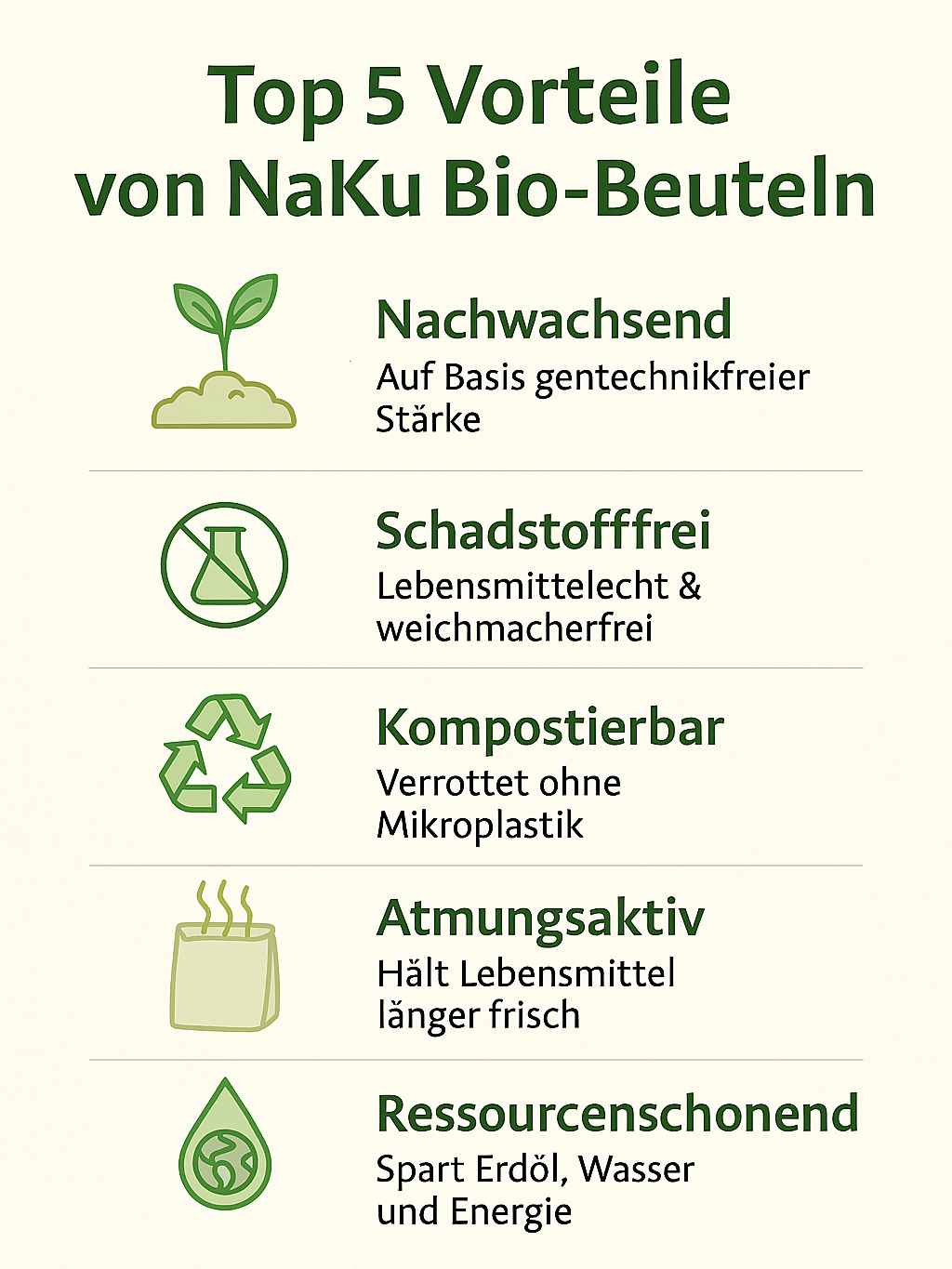
NaKu relies on plant-based starch from European, non-GMO agriculture . This results in breathable, water-resistant bags that are free of pollutants and plasticizers and compostable according to DIN EN 13432 – without permanent microplastics.
Benefits
- Renewable instead of fossil: Conservation of petroleum and reduction of the CO₂ footprint.
- pollutant-freeSafe for kitchen and household use.
- Compostable: Decomposes within weeks in compost (DIN EN 13432).
- Regional & GMO-free: Starch from European agriculture.
Paper in comparison: renewable, but resource-intensive
Paper is based on wood – a slow-growing resource – and the production of paper carrier bags is energy- and water-intensive ; depending on usage, the environmental impact can be unfavorable. Lightweight, functional packaging made from bioplastics can reduce resource consumption while simultaneously improving the freshness of food.
More than just carrier bags: NaKu products for kitchen & household
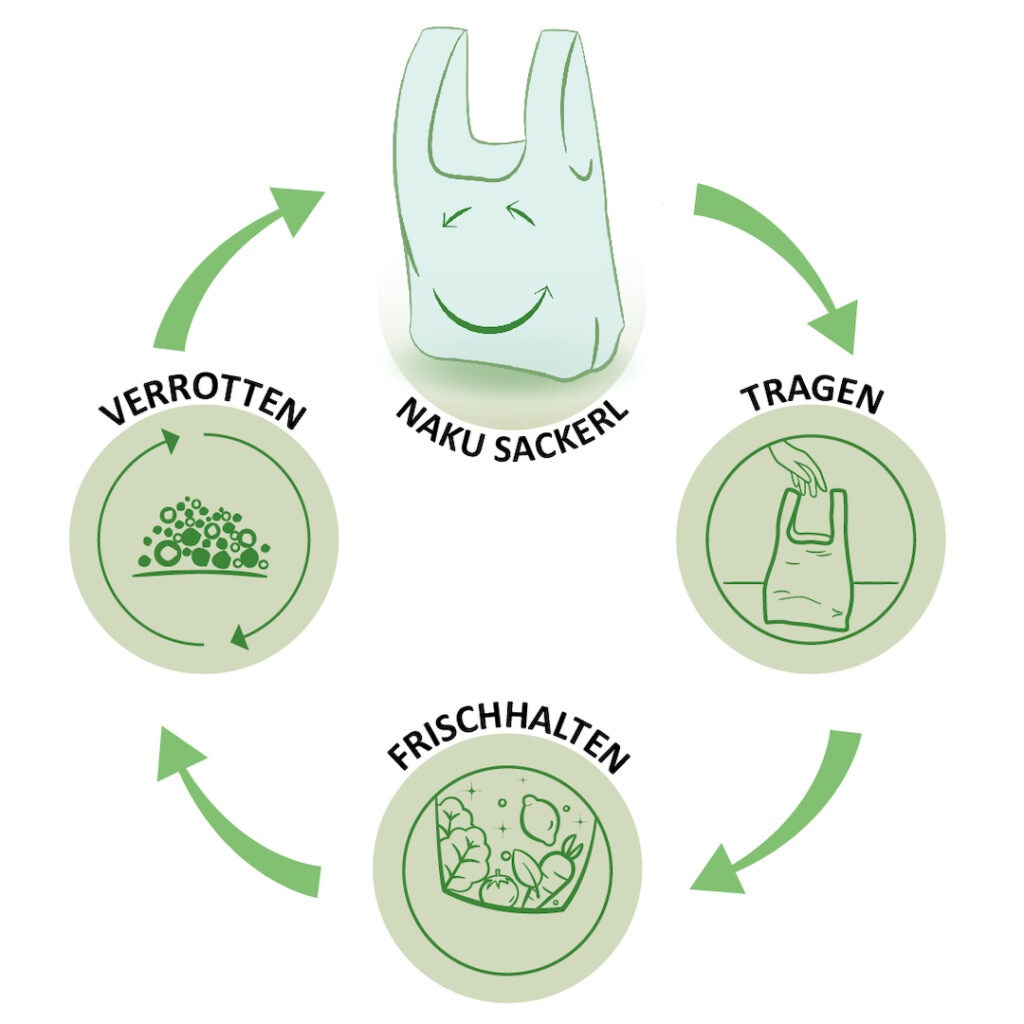
From food storage bags to freezer bags , cheese bags (cheese sleeping bags) to biodegradable carrier bags (carry – keep fresh – decompose): NaKu offers practical solutions for everyday use that serve as biodegradable waste bags at the end of their life cycle.
Food storage with NaKu Bio-Bags: Benefits you can taste
Keep fresh for longer
NaKu Bio bags are breathable and water-resistant . This microclimate prevents condensation and reduces mold growth, so fruits, vegetables, bread, and even mushrooms demonstrably stay fresh longer. A BOKU study shows, among other things, that lettuce stays fresh for up to 1,5 weeks longer in a NaKu bag ; bread lasts significantly longer than when stored uncovered.
Less food waste
Longer shelf life reduces the proportion of spoiled food – good for your wallet and the environment.
Recycling instead of waste
After multiple uses, the bags can serve as organic waste bags and compost within weeks , instead of remaining as microplastics.
Comparison: NaKu Bio-Bags vs. conventional containers
aluminum foil
- Advantages: Good barrier against light/grease, malleable.
- Disadvantages: Aluminum production is very energy-intensive; foil is often single-use and difficult to recycle in household contexts. NaKu bags offer a breathable freshness without metallic resource consumption and are compostable.
Glass container
- Advantages: Reusable, inert, good barrier.
- Disadvantages: HeavyEnergy-intensive manufacturing and transport; the environmental impact may be higher for lighter applications. NaKu bags are light, reduce condensation and save space in the refrigerator.
Plastic boxes (petroleum-based)
- Advantages: Reusable, robust.
- Disadvantages: Not breathablePromotes condensation → mold; based on fossil raw materials; microplastic risk. NaKu bags are plant based,, breathable and compostable.
Paper packaging
- Advantages: Renewable, compostable.
- Disadvantages: Low moisture barrier, unsuitable for moist/fresh foods; production water/energy intensiveCombine NaKu bags Breathability with water resistance and significantly extend the freshness.
Petroleum films (PE/PP) & conventional freezer bags
- Advantages: Affordable, waterproof.
- Disadvantages: Not breathableCondensation Mikroplastics, difficult recycling. NaKu freeze bag (2 L/4 L) are breathable, water-resistant, OK Compost Home, fully writable and Keeps food fresher for longer.
| Material | Benefits | Disadvantages | NaKu Advantage |
| aluminum foil | Good barrier, malleable | Very energy-intensive productionSingle-use, recycling difficult | Compostablebreathable, resource-saving |
| Glass container | Reusable, good barrier | Heavy, energy-intensive production and transport | Light, save space, breathable |
| plastic boxes | Robust, reusable | Fossil base, not breathableCondensation, mold, microplastics | Plant basedbreathable, compostable |
| paper packaging | Renewable, rottable | Water/energy-intensive production, poor moisture barrier | Water resistant, keeps food fresher for longer |
| Petroleum films (PE) | Affordable, waterproof | Not breathableCondensation, microplastics, difficult recycling | breathable, water-resistant, OK Compost certified |
Practical advice: How to make optimal use of NaKu Bio-Bags
- Fruits & VegetablesPlace dry, observing refrigerator zones (e.g., vegetable drawer); do not overfill bags → air circulation is maintained. (Advantage: less condensation, longer freshness.)
- Bread & Pastries: In the Biodegradable food storage bags give - stays fresh and aromatic for longerThe risk of mold decreases.
- Cheese: cheese sleeping bag Use – protects aroma, prevents drying out.
- Freeze: Biodegradable freezer bags (2 L/4 L) use; contents or bio-bag can be written on completely.
- Close life cycle: After multiple uses as Organic waste bags use and compost.
Variety for everyday life & advertising
NaKu offers biodegradable carrier bags (exempt from the plastic bag ban), biodegradable food storage and freezer bags , cheese and garbage bags , as well as printable promotional bags that make sustainability visible — carrying, keeping fresh, decomposing in one product.
Conclusion
Bags, pouches, and sacks that regenerate : Using starch from European, GMO-free agriculture , NaKu offers a pollutant-free , compostable , and functionally superior alternative to fossil and slowly renewable raw materials. For food storage, NaKu bio-bags often significantly outperform conventional solutions—offering longer freshness , less food waste , and a true circular economy instead of creating garbage.
FAQ – Frequently asked questions about bags, pouches, films, carrier bags, and sacks made from renewable raw materials
What makes NaKu Bio-Beaches sustainable?
NaKu Bio bags are based on plant starch from European, non-GMO agriculture . They are compostable , free of pollutants, and conserve fossil resources.
Are NaKu Bio bags really compostable?
Yes, all NaKu Bio bags are certified according to DIN EN 13432 and decompose completely – without permanent microplastics.
How do NaKu bio bags differ from conventional plastic bags?
Conventional plastic bags are petroleum-based and break down into microplastics. NaKu bio-bags are plant-based , breathable , and compostable.
Do foods in NaKu bags stay fresh longer?
Yes! Thanks to its breathable structure , fruit, vegetables, and bread stay fresh longer. Studies show that lettuce stays fresh for up to 1,5 weeks longer .
Are NaKu Bio bags suitable for the refrigerator?
Yes, they are ideal for storage in the refrigerator. They prevent condensation and reduce mold growth.
Can I freeze NaKu Bio bags?
Yes, NaKu freezer bags are also water-resistant and can be written on across the entire surface for better labeling of the contents.
How often can I use NaKu Bio bags?
Multiple uses! After being used as food storage or freezer bags, they can be used as organic waste bags and then composted.
Are NaKu Bio bags safe for food?
Yes, they are free from plasticizers and harmful substances – perfect for fruit, vegetables, bread and cheese.
Where can I buy NaKu Bio bags?
In brick-and-mortar stores and in the NaKu online shop.
Request a quote or contact us now