
NaKu goes 3D printing: Sustainable innovation with bioplastic recycling material
A fascinating and innovative 3D printing project by REX|LAB of the Institute for Experimental Architecture at the University of Innsbruck
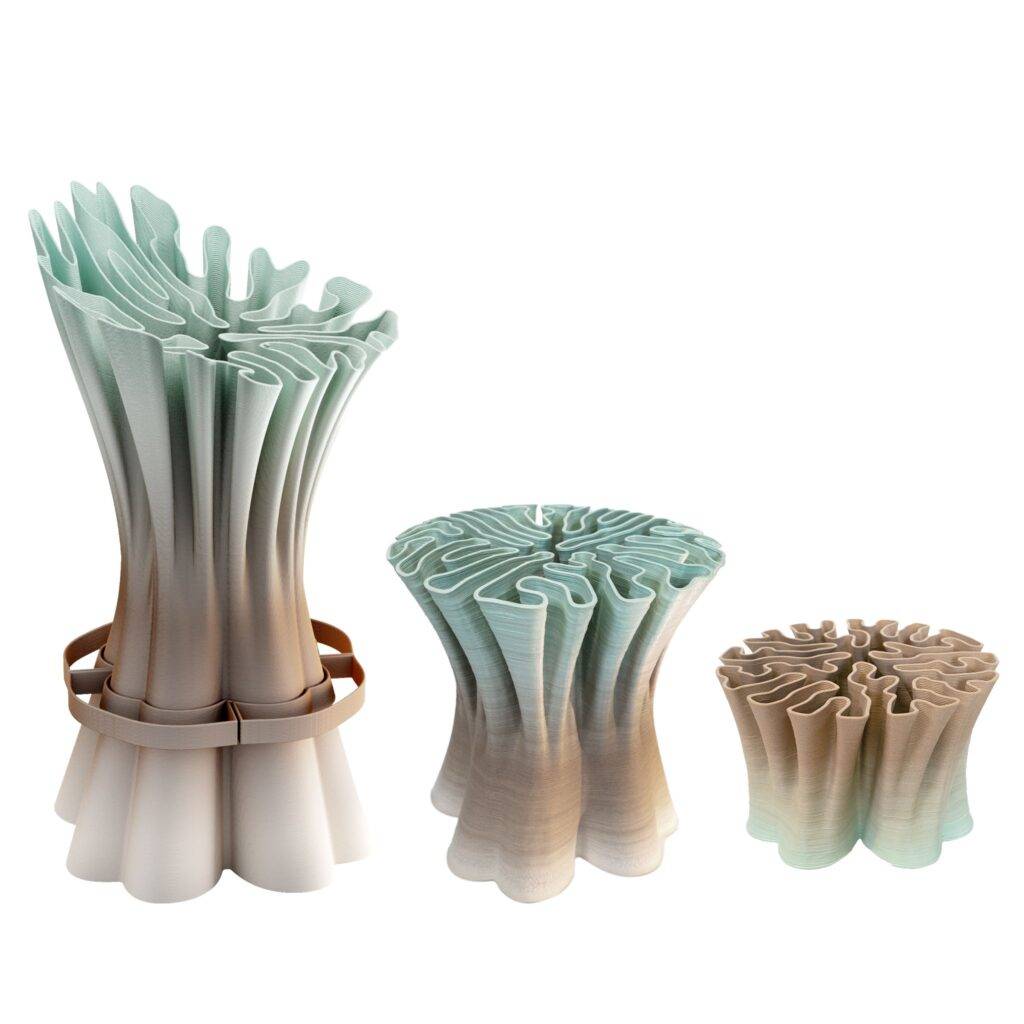
NaKu goes 3D printing: REX|LAB has started a fascinating project that also uses NaKu's bioplastic recycling material for 3D printing. The idea behind this project is to find sustainable solutions while exploring the possibilities of 3D printing.
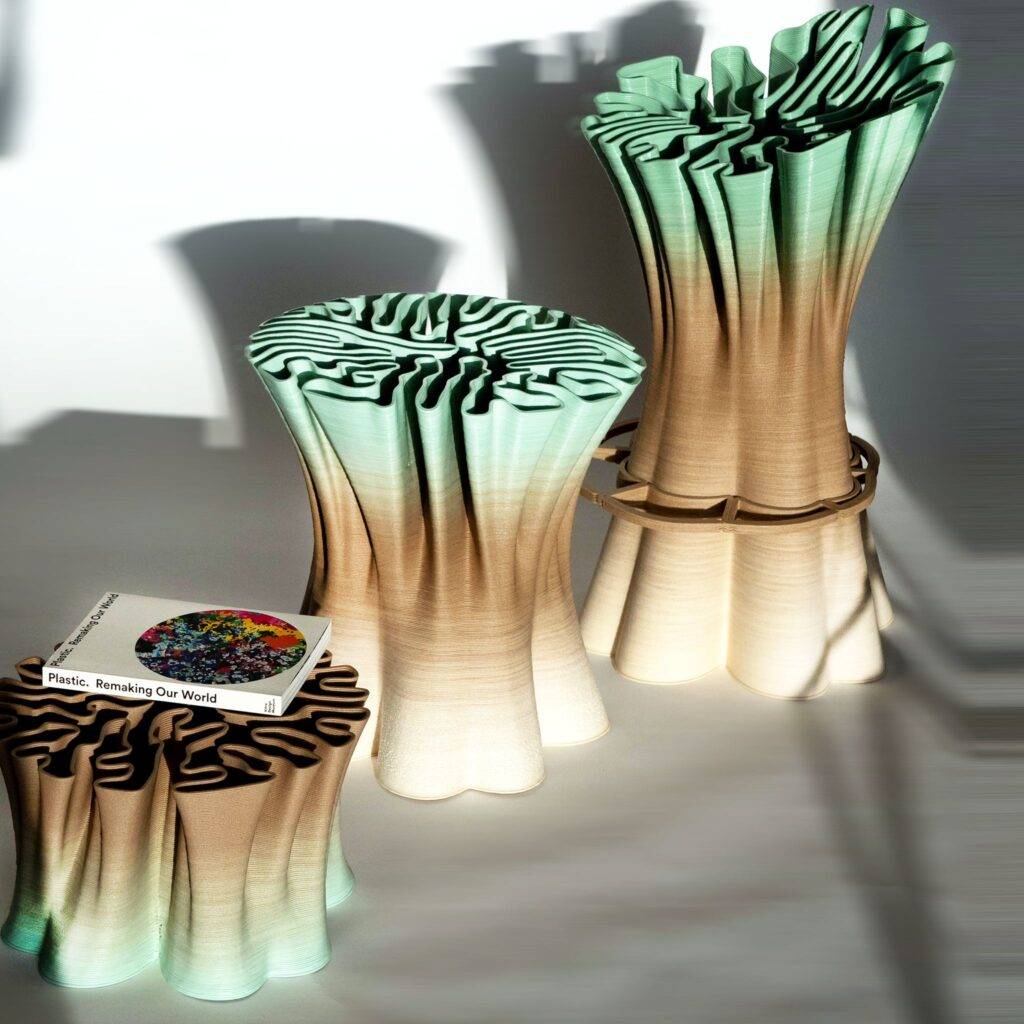
A very exciting example is the “Quadrifoglio” furniture series, which uses, among other things, a starch compound called NaKuR. This material was obtained from one of our recycling projects. The use of (recycled) bioplastics in 3D printing sets an example for environmental protection and resource conservation.
The combination of innovative design and sustainable materials makes Quadrifoglio a unique piece of furniture that is not only functional but also underlines responsibility for the environment. NaKuR shows that recycled material is not only important for environmental protection but also enables aesthetically pleasing products.
We are excited about further developments and projects in the field of bioplastics and 3D printing – a promising combination for a sustainable future!
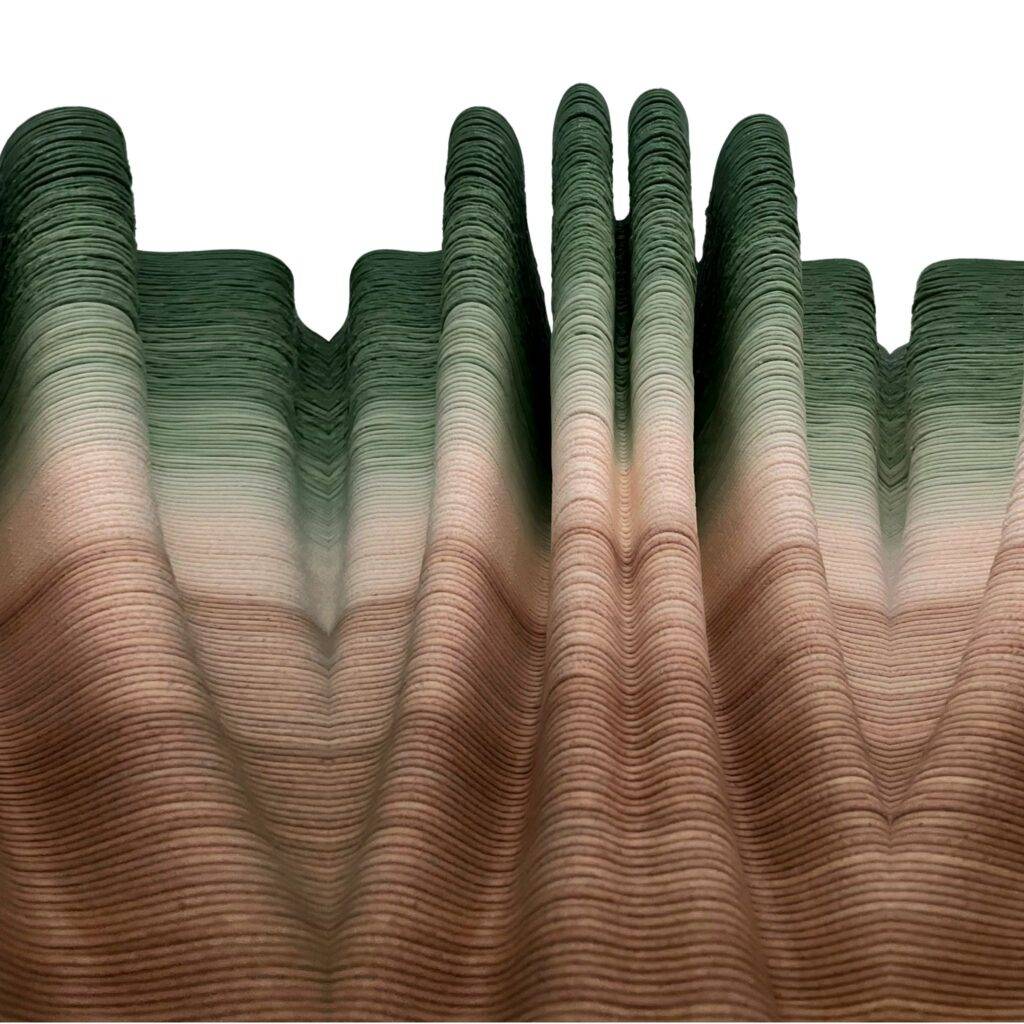
Quadrifoglio: gradual furniture with NaKuR – a starch compound from one of our recycling projects
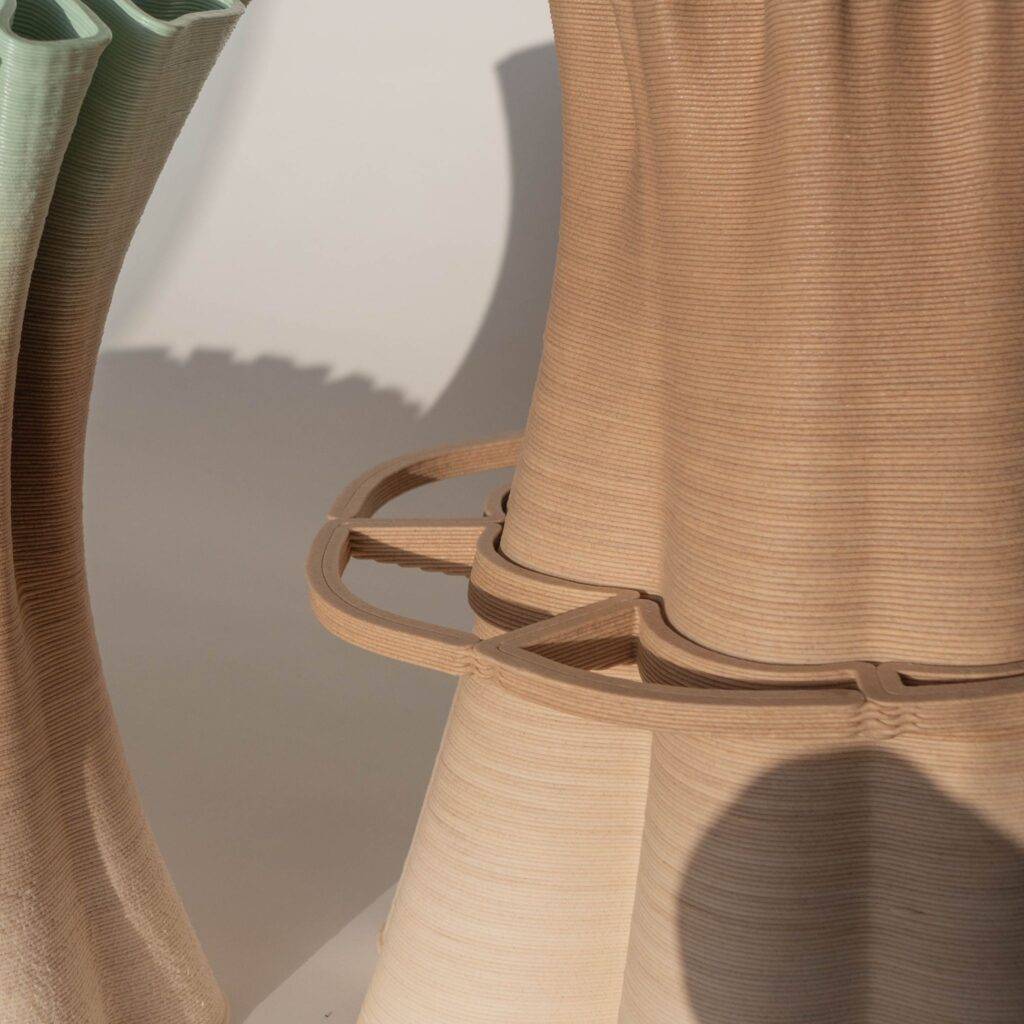
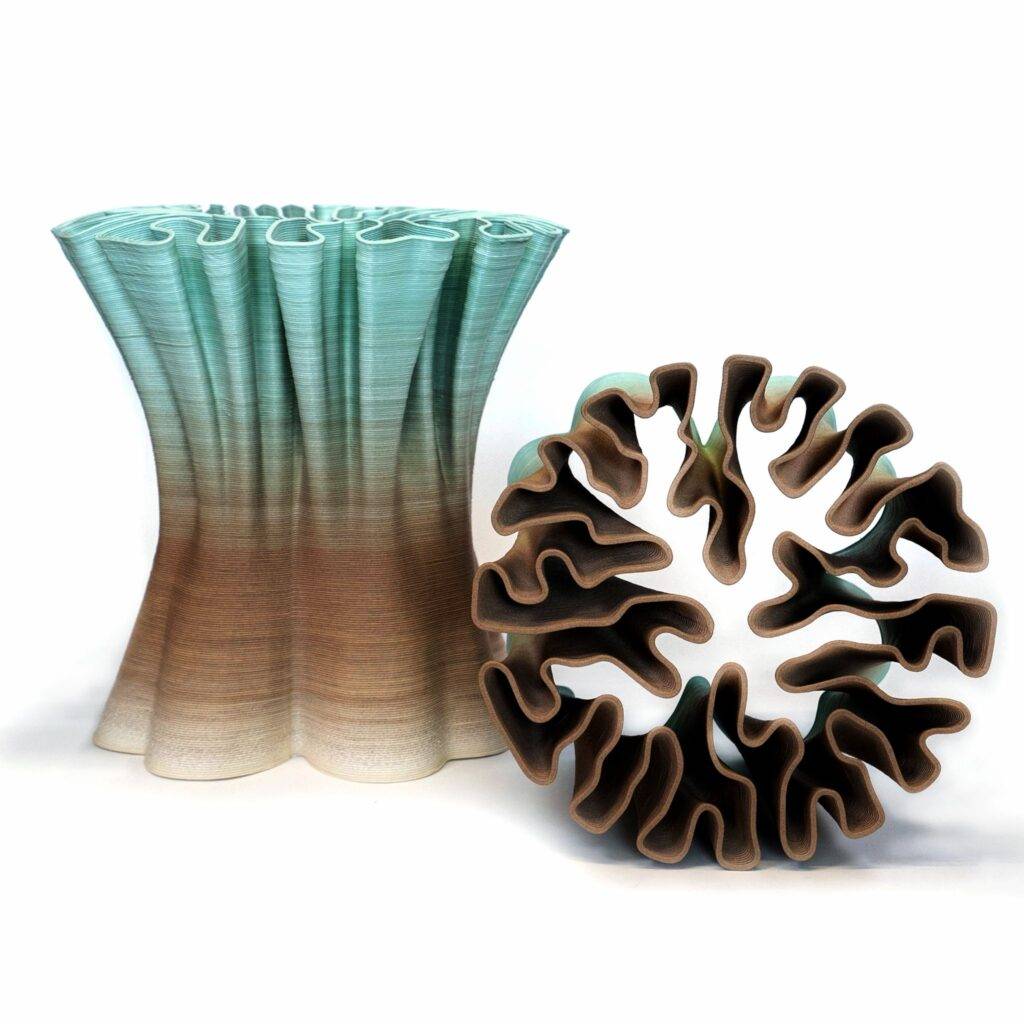
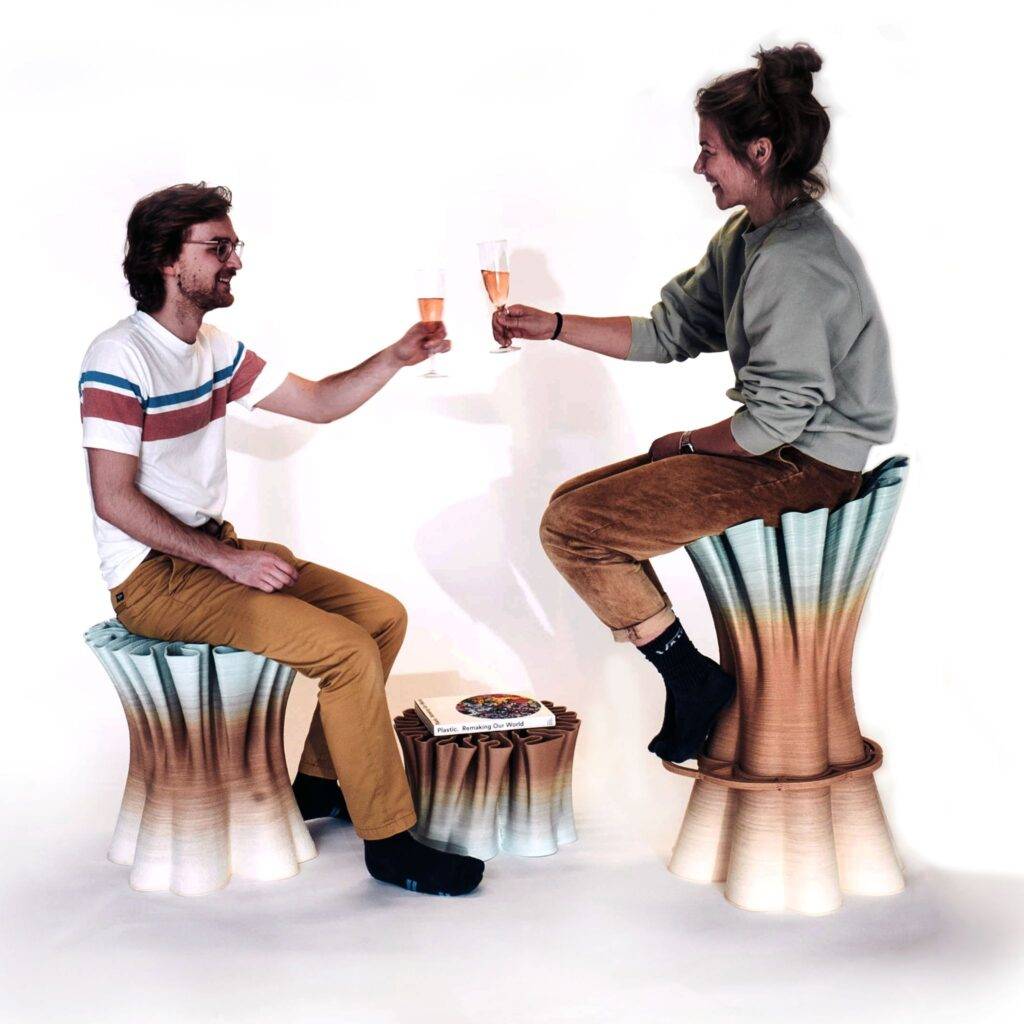
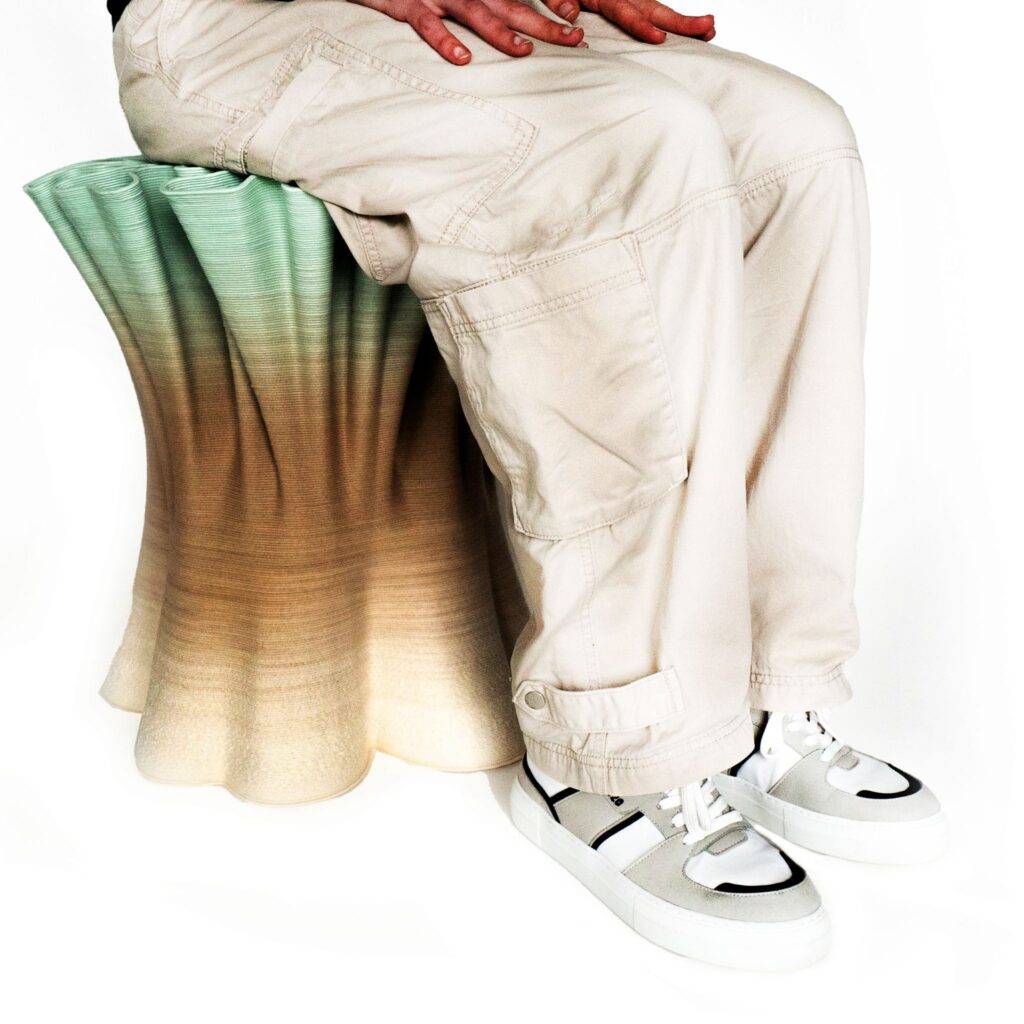
Quadrifoglio is a limited collection of three robotically printed 3D stools of different heights designed and manufactured by REX|LAB, the robotics experimental laboratory at the Institute of Experimental Architecture, University of Innsbruck, Austria.
This series of stools with graduated material and color properties is suitable for indoor and outdoor use.
At the heart of the manufacturing process is the innovative application of additive 3D printing technology, supported by industrial robots. This approach enables the realization of complicated geometries and customized designs.
The stools are made from ecological, sustainable and/or recycled bio-composites based on wood, cellulose fibers and recycled polymers and are suitable for indoor and outdoor use. The material mixtures combine a variety of material types and a wide range of property profiles. The materials are up to 100% bio-based. Depending on the recipe, they contain biopolymers such as polyhydroxyalkanoates (PHA), polycaprolactone (PCL), polyester (e.g. bio-PET), starch, polylactic acid (PLA), bio-polyolefins (bio-PE), bio-polyamides (bio-PA), lignin, natural resins, natural waxes, natural oils, natural fatty acids, cellulose, organic additives and natural reinforcing fibers.
About REX|LAB
The Robotics Experimental Laboratory (REX|LAB) was founded in October 2012 by Prof. Dr. Marjan Colletti. It is located at the Institute of Experimental Architecture at the University of Innsbruck and serves as a central hub to push the boundaries of design experimentation, material innovation and robotic manufacturing in design and architecture at 1:1 scale. The experimental research spirit of REX|LAB has led to the creation of spin-off companies, including Incremental 3D (specializing in 3D printing of concrete) and CeraLab (specializing in 3D printing of clay).
At the heart of the technological infrastructure are state-of-the-art facilities, including a range of desktop 3D printers and a medium-sized Universal Robots cobot equipped with a vertically extendable axis. In addition, REX|LAB is home to three six-axis industrial robots with a 20 kg payload. REX|LAB's equipment portfolio includes versatile tools tailored for large-scale 3D printing, using recyclable materials in both filament and pellet form. The ability to recycle materials by crushing objects maximizes resource utilization and minimizes waste. This emphasis on sustainability underscores REX|LAB's conscientious approach to environmental protection, while pushing the boundaries of what is technologically feasible.
Further information: https://www.exparch.at/ and https://isola.design/Designer-Projects-quadrifoglio
You can find more information about recycling bioplastics here.
Photo credit: REX|LAB, University of Innsbruck (DI Georg Grasser, MAS)
FAQ – Frequently asked questions about 3D printing with bioplastics (rPLA)
What is the NaKu and REX|LAB collaboration project about?
The collaboration between NaKu and the REX|LAB at the University of Innsbruck focuses on using recycled bioplastics for 3D printing. The goal is to develop sustainable solutions and explore the possibilities of 3D printing with environmentally friendly materials.
What is the result of the project?
One concrete result of the collaboration is the "Quadrifoglio" furniture series, a limited collection of three robot-printed 3D stools made from ecological and recycled biocomposites.
What are the advantages of the materials used?
The stools are made from a starch compound called NaKuR , which originates from a recycling project by NaKu. The materials are up to 100% bio-based and suitable for both indoor and outdoor use. The project demonstrates that recycled materials are not only environmentally friendly but also suitable for aesthetically pleasing and functional products.