

Composting at NaKu
From raw material back into the cycle
All NaKu products contain a proportion of plant-based raw materials. These raw materials are used to produce biopolymers and compounds, which are then processed into packaging and other products. At the end of their life cycle, various disposal options are available, depending on the product, including recycling, biological treatment, or industrial composting.
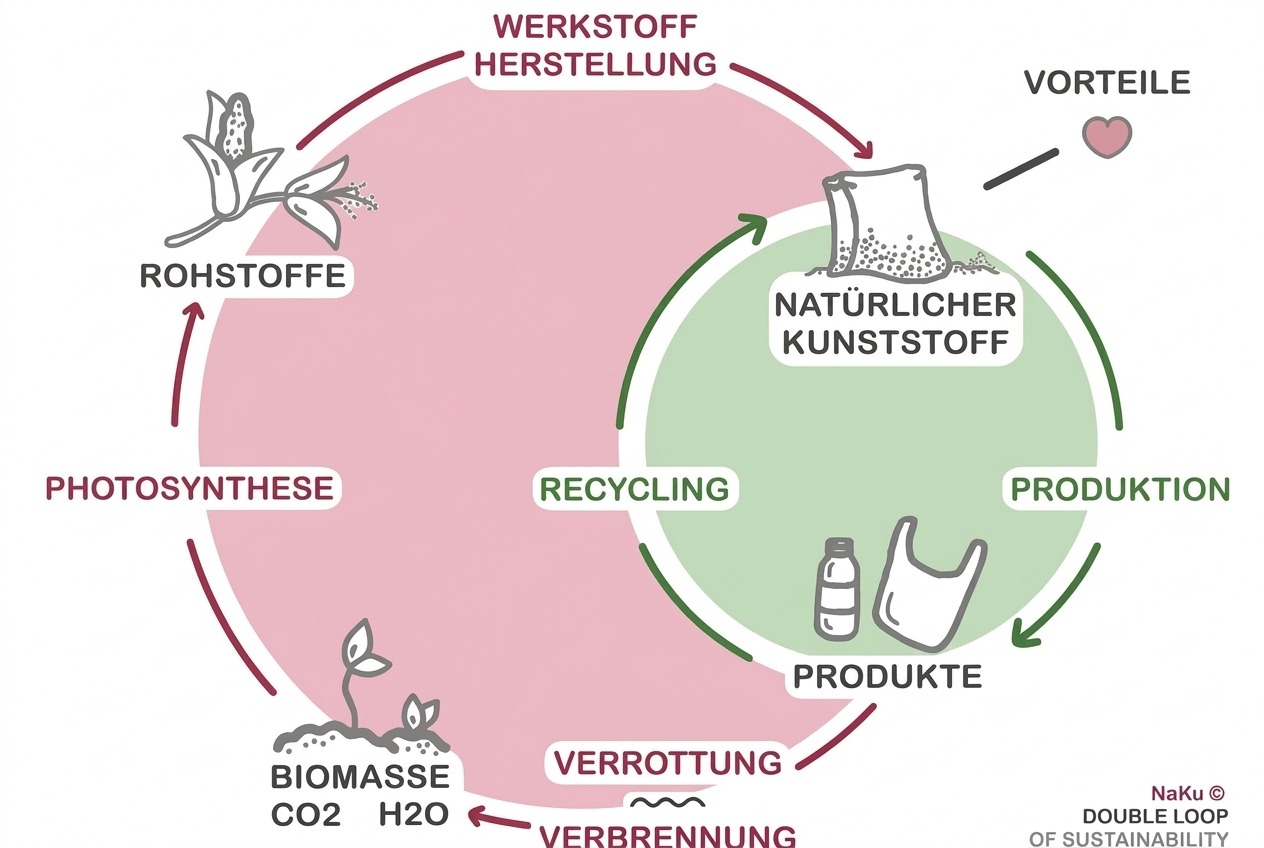
The NaKu cycle
The cycle begins with renewable raw materials and does not necessarily end with disposal.
Corn → Cornstarch → Raw Compound → NaKu Compound → NaKu Product → Utilization
Depending on the material and product type, recycling can be carried out in different ways. Which recycling option is suitable depends on the product properties, the respective certifications, and the available collection and recycling systems.
What does biodegradation mean?
Biodegradable materials can be transformed by microorganisms such as bacteria and fungi under suitable conditions. This process produces water, carbon dioxide, and biomass. The speed of this process depends on various factors:

1. Microorganisms (bacteria and fungi)

2. Temperature

3. Duration (depending on wall thickness)
Not every NaKu product is used in the same way.
The properties of bioplastics vary depending on the material and application.
Therefore, not all NaKu products have identical recycling or composting properties. Depending on the product and the capabilities of the respective collection and recycling system, different recycling methods may be suitable:
- Recycling
- industrial composting
- biological utilization
- energetic recovery
The product-specific information, certifications and application instructions are always decisive for the assessment of a specific product.
Industrial composting
Industrial composting facilities operate under controlled conditions with regard to temperature, humidity, and ventilation. These conditions support the biodegradation of organic materials.
The example of a NaKu freshness bag demonstrates that, under optimal industrial composting conditions, biodegradation can occur within a few weeks. However, the actual degradation times depend on the specific product and the particular composting facility.
Composting outside of industrial facilities
Outside of industrial composting facilities, biological degradation processes typically proceed more slowly.
Both industrial composting facilities and well-maintained home compost heaps can break down biodegradable materials. The main difference lies in the conditions. Industrial composting facilities operate under controlled conditions with temperatures of around 58°C, which accelerates the biodegradation process. The corresponding tests are typically conducted over a period of at least 45 days.
Home composting takes place under natural conditions at significantly lower temperatures. Tests for home-compostable products are conducted at temperatures of approximately 15°C to 30°C. A home composting cycle typically lasts at least 12 months.
The fact that a product is industrially compostable does not automatically mean that it is also certified for home composting. Home composting is subject to its own testing requirements and standards.
How is compostability tested?
Compostability is assessed using standardized testing procedures. These procedures examine, among other things, the following criteria:
- biodegradation of the material
- physical disintegration during composting
- Effects on the quality of the compost
- Effects on plants, microorganisms and soil organisms
- possible residues in the compost
These investigations are carried out on the basis of recognized testing procedures and standards.
Practical example: Composting experiment with a NaKu PLA bottle
The biodegradability of individual materials is regularly investigated. One example is a documented composting trial with a NaKu PLA bottle. The photographic documentation shows the degradation progress of the material under controlled experimental conditions over a period of 35 days.
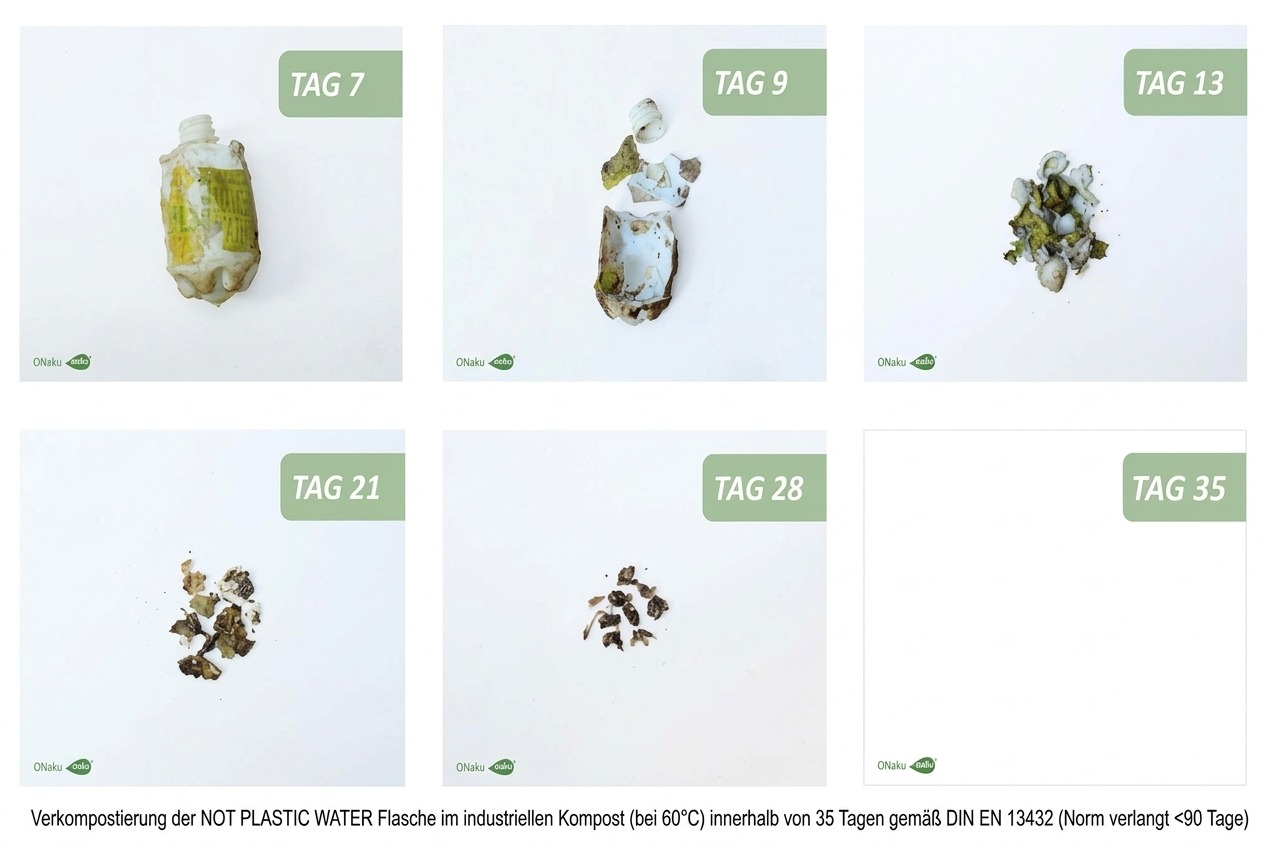
The investigation was conducted by Assistant Professor Ines Fritz, PhD, at the Institute of Environmental Biotechnology, Inter-University Research Institute for Agricultural Biotechnology Tulln (IFA-Tulln). Biodegradability was examined according to the test methods EN 14046 (laboratory composting test) and OECD 301 B (modified storm test). For the composting test, the samples were mixed with fresh biocompost and incubated under controlled conditions at 58 °C for a period of 64 days. The evaluation was based on measuring the amount of carbon dioxide produced during microbial degradation.
The test report concluded that the material meets the requirements of EN 13432 and can be classified as fully biodegradable under thermophilic composting conditions. The required conversion rates were achieved in the composting trial.
Note: The results shown refer exclusively to the conditions of the respective experiment. The actual duration of biodegradation can vary considerably depending on product geometry, material thickness, temperature, humidity, oxygen supply, and the specific environmental conditions. The image documentation therefore serves solely to illustrate the degradation behavior under defined laboratory or composting conditions.

Your personal contact
Do you have any further questions about our NaKu organic bags or about individual printing of the NaKu organic bags with your company logo?
Lizzy Weinert is looking forward to hearing from you:
E-Mail: office@naku.at
Phone: + 43 (0) 660 551 7789
(weekdays Mon – Thu from 09:00 – 16:00 and Fri from 09:00 – 14:00)
Follow us on Facebook and Instagram, we'll be happy to follow you back on your social media channels!

