InnoWAP research project: Press release from BOKU
“InnoWAP”: How aquatic and marsh plants can be transformed into packaging, textile fibers, and paper
innoWAP – BOKU scientists, together with partners from industry and research, are developing a sustainable and decentralized utilization strategy for the use of locally occurring aquatic and marsh plants in an FFG-funded project.
Here you can read the original press release from BOKU, which you can also access directly on the BOKU website.
Press release from BOKU – University of Natural Resources and Life Sciences Vienna
Every year, the City of Vienna's amphibious mowing boats operate on the Old Danube to keep aquatic plants – so-called macrophytes – under control and ensure uninterrupted swimming fun in the summer. The occurrence of aquatic plants in the Danube has increased enormously in recent years. Since the plants can grow up to two meters in just four weeks, the rampant macrophytes are regularly harvested.
Potential recognized and utilized
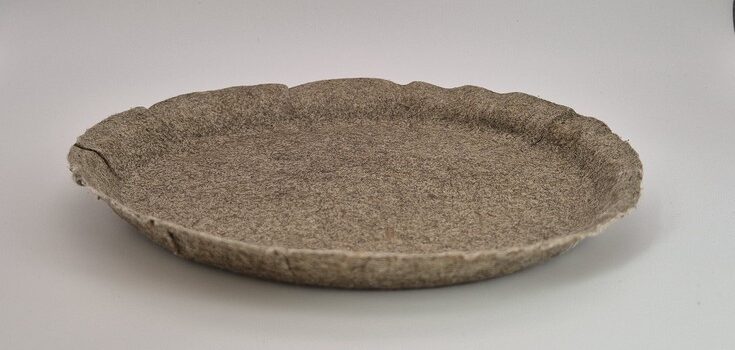
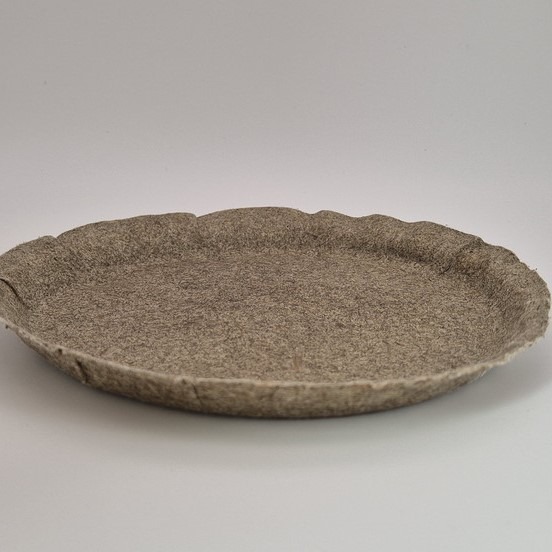
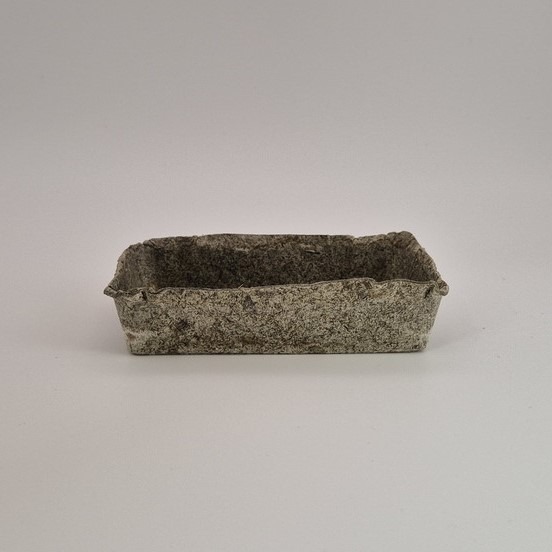
Researchers at BOKU (University of Vienna and Lower Austria) long ago recognized and exploited the great potential of macrophytes in the Danube in Vienna and Lower Austria: These aquatic plants are ideally suited for the production of packaging materials and other cascading uses. Marco Beaumont and Armin Winter (both from the Institute of Chemistry of Renewable Resources) have developed suitable methods for easily utilizing this urban, renewable resource for the production of degradable packaging materials, disposable plates, and cups, while adhering to the principles of "green chemistry." They have already been honored with the Lower Austria Energy Globe Award for this work.
Partners from industry
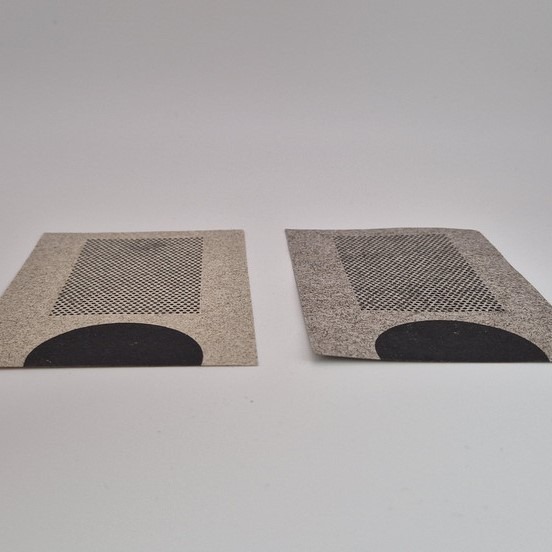
In the "InnoWAP" project, funded by the Federal Ministry for Innovation, Mobility and Infrastructure (BMIMI) with €1,15 million and implemented by the Austrian Research Promotion Agency (FFG), researchers aim to develop a sustainable and decentralized utilization strategy for the large-scale use of locally available aquatic plants over the next three years. The focus is on submerged aquatic plants from the Old and New Danube in Vienna, as well as emersed marsh plants – particularly reeds – from Lake Neusiedl. A total of nine partners from industry and research (industry: Flatz, NaKu, Lenzing AG, Berky, Lenzing Papier; research: BOKU, FOTEC, TU Graz, Wood K plus) as well as the City of Vienna are involved in processing reeds and aquatic plants into specialty papers, textile fibers, food trays, and packaging materials.
Circular use
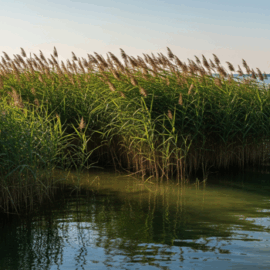
In Vienna alone, between 3.000 and 4.000 tons of submerged aquatic plants are harvested annually. This biomass is currently primarily composted. In addition, aquatic plants are harvested from weed control measures for flood protection in waterways. Due to the seasonal availability and short fiber length of submerged aquatic plants, the project is also investigating long-fiber reeds, of which approximately 5.000 tons are harvested annually from Lake Neusiedl – with a total available potential of up to 75.000 tons per year. The development of an ecologically and economically sustainable on-site processing process aims to minimize transport and storage costs and enable circular use in the spirit of the circular economy.
"With InnoWAP, we demonstrate that ecological water management and economic use can go hand in hand. We are transforming previously unused biomass into valuable resources for the circular economy and reducing CO2 emissions. Through the sustainable use of reeds and aquatic plants, we are revitalizing important ecosystems and simultaneously creating new value chains and new economic opportunities in Austria," emphasizes project manager Marco Beaumont.
Co-project leader Armin Winter emphasizes: "Aquatic and marsh plants are an undervalued raw material. With InnoWAP, we are harnessing them for the bioeconomy and bringing together science and industry to develop sustainable alternatives to fossil and wood-based raw materials. By integrating aquatic plants and reeds into the circular economy, we are securing regional raw materials in the long term and reducing transport and disposal costs."
"InnoWAP is a visible flagship project that will demonstrate how unused biomass streams can be meaningfully transformed into sustainable products. Given the increasing growth rates of aquatic plants caused by eutrophication and climate change, efficient management of affected waters is of international relevance," emphasizes Thomas Rosenau, Director of the Institute for Chemistry of Renewable Resources. The technologies developed are therefore groundbreaking and will strengthen Austria as a business location in the long term."
For Christian Obinger, Vice Rector for Research and Innovation, "this project wonderfully demonstrates how small, innovative projects financed by the City of Vienna's Anniversary Fund for the University of Natural Resources and Life Sciences, Vienna, can form the basis for large, comprehensive research projects." InnoWAP can become a flagship project in BOKU's Sustainable Materials and Technologies competence area.
Scientific contact:
Dr. Marco Beaumont
Institute for Chemistry of Renewable Resources
BOKU University
marco.beaumont(at)boku.ac.at
Phone: +43 1 47654-77436
Dipl.-Ing. Dr. Armin Winter
Institute for Chemistry of Renewable Resources
BOKU University
armin.winter(at)boku.ac.at
Tel: + 43 1 47654-77436
Prof. Thomas Rosenau
Institute for Chemistry of Renewable Resources
BOKU University
thomas.rosenau(at)boku.ac.at
Phone: +43 1 47654-77411
All published articles about the InnoWAP project in our news section can be found here.
Copyright notice/Image credits: Photos (c) BOKU
InnoWAP is being funded under the Circular Economy and
Production technologies 2024 funded by the BMIMI and managed by the FFG.

FAQ – Frequently asked questions about the InnoWAP project
What is the InnoWAP project?
InnoWAP stands for "Innovative Valorization of Aquatic Plants from the Danube Region." The goal is to process aquatic and marsh plants (WASU) in a decentralized biorefinery into valuable raw materials for bio-based products.
Which plants are used in the project?
Mainly aquatic and marsh plants such as reeds are used, especially from Lake Neusiedl and other bodies of water in the Danube region.
What are the main objectives of the project?
Establishment of a value chain for WaSu
Development of a decentralized processing process
Promoting the circular economy
Contribution to ecological and economic sustainability goals
What products are produced from aquatic plants?
The plants are processed into raw materials for bio-based products such as packaging, textiles and specialty papers.
How does the project contribute to environmental protection?
It helps prevent silting up of water bodies, promotes biodiversity, improves flood protection and reduces greenhouse gas emissions.
What role does Lake Neusiedl play in the project?
The lake is an important source of reeds, which are used in the project. At the same time, the use of the reeds improves the lake's ecological situation.
Who are the project partners?
The project is led by BOKU (University of Natural Resources and Life Sciences, Vienna), with NaKu as one of the industrial partners. Project leader is Dr. Marco Beaumont, and co-leader is Dr. DI Armin Winter.