Ultimate freshness check: Which food storage bag protects your fruit?
Food storage bags – Why proper storage is crucial
Fruits and vegetables are delicate. Improper storage leads to a loss of quality and contributes significantly to food waste. Studies show that tons of fruit and vegetables are thrown away in Europe every year, often because they spoil too quickly. Choosing the right material for your food storage bag can make a difference.
Common materials for storing fruit and vegetables
| Material | Benefits | Disadvantages |
| Open storage | No packaging material, environmentally friendly | Rapid moisture loss, short shelf life |
| Plastic bags (petroleum-based) | Protects against dehydration, inexpensive | Lack of breathability, condensation → mold, microplastics, recycling problem |
| paper packaging | Breathable, compostable | Low moisture barrier, unsuitable for moist products |
| Glass/plastic boxes | Reusable, good protection | Space requirements; glass is heavy and energy-intensive. |
| Oilcloths | Reusable, natural materials | Limited freshness retention, maintenance required |
Food waste due to improper storage
Improper storage is one of the main causes of food waste. Ethylene from apples accelerates the spoilage of delicate vegetables, and condensation in conventional petroleum-based plastic bags promotes mold growth. Optimized storage therefore saves money and reduces CO₂ emissions.
Is there an alternative to conventional products or food storage bags for food storage?
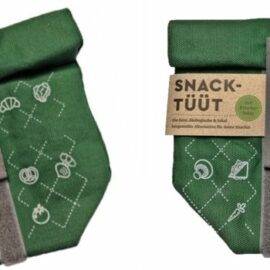
Yes, there is an alternative to conventional materials for food storage products. For example, NaKu Bio food storage bags. They are made of bioplastic based on plant starch, meaning they are based on rapidly renewable plant-based raw materials. This makes them:
- Breathable and water-resistant – prevents condensation and mold.
- Compostable according to DIN EN 13432 – no permanent microplastics.
- Can be used multiple times – can then be used as a compostable waste bag.
- Optimal storage Food stays fresh longer
The BOKU study on this: Evidence of longer freshness
The University of Natural Resources and Life Sciences (BOKU) investigated the storage of apples, mangoes, tomatoes, lettuce, mushrooms, and bread in three ways: open, in conventional plastic bags, and in NaKu bio-bags. Bread kept more than twice as long in the NaKu bag compared to open storage, and fruits and vegetables stayed fresh and flavorful for longer. The study shows that using NaKu bags can reduce food waste. The study can be read here.
Conclusion
Choosing the right material for storing fruits and vegetables is crucial for freshness, flavor, and sustainability. While conventional petroleum-based plastic bags have ecological drawbacks and open storage often leads to rapid spoilage, biodegradable food storage bags like those from NaKu offer an environmentally friendly and effective solution. They extend shelf life, reduce food waste, and are fully compostable – a small step with a big impact on the environment and climate.
FAQ – Frequently asked questions about the optimal storage of food
Why is proper storage of fruits and vegetables so important?
Because improper storage leads to rapid spoilage and thus to food waste. Optimized storage extends shelf life and saves resources.
What materials are typically used for storage?
Open storage, plastic bags (petroleum-based), paper packaging, glass or plastic boxes and beeswax wraps.
What are the disadvantages of conventional plastic bags?
They are not breathable, promote condensation and mold, cause microplastics and are difficult to recycle.
Are paper packaging options a good alternative?
Only to a limited extent: They are breathable, but unsuitable for damp products as they do not offer a moisture barrier.
How do glass or plastic boxes affect storage?
They offer good protection and are reusable, but require a lot of space. Glass is also heavy and energy-intensive to produce.
What makes beeswax wraps special?
They are reusable and made from natural materials, but have a limited freshness-preserving function and require care.
What is special about the NaKu organic food storage bag?
It is breathable, water-resistant, compostable according to DIN EN 13432 and can be reused multiple times – afterwards as a biowaste bag.
How does the BOKU study demonstrate the effectiveness of the NaKu bags?
The study shows that bread stays fresh twice as long in the NaKu bag, and that fruit and vegetables also retain their aroma for longer.
Can the use of NaKu bags reduce food waste?
Yes, the longer shelf life of food significantly reduces the amount of products that are thrown away.
Are biodegradable food storage bags more expensive than conventional plastic bags?
They may be a bit more expensive, but offer ecological benefits and help to avoid food waste – which saves costs in the long run.
Request a quote or contact us now