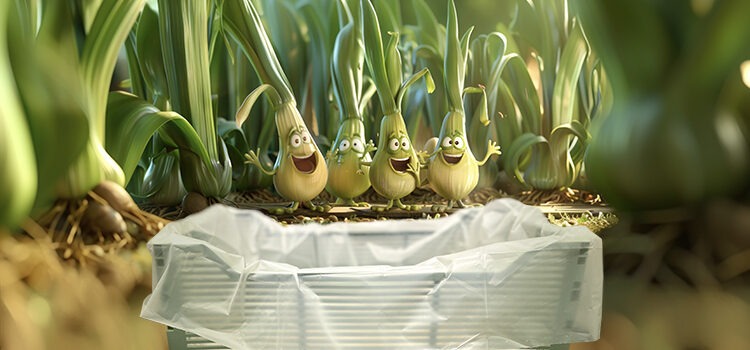
Keeps produce fresher for longer: The ultimate liner bag check for organic produce boxes
Why an insert bag is indispensable
Organic produce boxes are a popular concept for the direct marketing of fruits and vegetables. They bring fresh produce directly from the farm to the consumer – hygienic, practical, and sustainable. However, without additional protection, the food often lies unprotected in the transport box or reusable crate. This can lead to moisture damage, dirt accumulation, and increased cleaning effort. A liner bag provides a solution: it protects the produce, facilitates cleaning, and helps maintain freshness. Choosing the right material is crucial – for functionality, food safety, and environmental impact.
Materials for insert bags: Advantages and disadvantages at a glance
Paper insert/liner
Paper is considered environmentally friendly and is frequently used as a lining material. It is biodegradable and made from renewable resources. However, in practice, paper quickly reaches its limits: when it comes into contact with moist vegetables, it becomes soggy and loses its stability. Furthermore, paper offers little barrier protection against moisture or oxygen, which limits its ability to keep food fresh.
Recycled paper can be particularly problematic: studies show that recycled fibers are often contaminated with residues from printing inks, adhesives, and mineral oils. Substances such as MOSH/MOAH (mineral oil hydrocarbons), chloropropanols, or PFAS can migrate into food if the paper comes into direct contact with it. Therefore, from a health perspective, recycled paper is problematic for use as a direct insert.
Polyethylene (PE) liner bags/inserts
PE is a petroleum-based plastic characterized by high tear strength and moisture resistance. Functionally, PE is hard to beat – but from an ecological perspective, it is problematic. PE is not biodegradable and contributes to global plastic pollution.
The microplastics problem is particularly critical: tiny plastic particles can be created during use, disposal, or mechanical stress, which then enter soils and waterways. Furthermore, many petroleum-based plastics contain pollutants such as plasticizers, heavy metals, or endocrine disruptors, which can be harmful when in contact with food.
Fiber-based solutions for insert bags/inserts
In addition to films, fiber-based materials such as grass cardboard or other plant fibers are increasingly being used – especially for trays and outer packaging. They are recyclable and more resource-efficient than virgin fiber paper, but are only suitable for moist foods with an additional coating. They are less practical for insert bags, but can serve as a supplementary packaging solution.
Liner/liner made of compostable biofilm (bioplastic)
A sustainable alternative is the use of storage bags made from bioplastics or compostable biofilms. These materials are based on plant-based raw materials such as starch (corn, potato). Depending on their composition, they are compostable at home or industrially and offer good barrier properties against moisture and oxygen. This keeps fruits and vegetables fresher for longer, and the films reliably protect the produce. They are free of microplastics and pollutants and integrate into natural material cycles.
Practical requirements for liner bags
Insert bags must:
- Tear-resistant and moisture-resistant breast
- Food safe and be free of pollutants
- Compostable or recyclable breast
- Freshness and hygiene guarantee
- Logistically feasible its (size, handling, disposal)
Many conventional solutions only meet some of these requirements. Paper, in particular, quickly reaches its limits when used with moist fruits and vegetables, while PE, although functional, remains ecologically problematic.
The sustainable alternative: Organic liner bags made from renewable raw materials
For organic farms seeking an environmentally friendly and functional solution, bioplastic liner bags are a compelling choice. Based on plant-based raw materials, they are compostable, microplastic-free, and offer excellent freshness retention. One example is the NaKu Bio liner bag , made from cornstarch sourced from European agriculture and also suitable for composting (DIN 13432). It is tear-resistant, moisture-resistant, food-safe, and reduces the cleaning effort required for crates – a solution that combines ecological responsibility with practical functionality.
FAQ – Frequently Asked Questions about Insert Bags/Inserts
Why are liner bags needed in organic waste boxes at all?
Liner bags protect fruit and vegetables from moisture, dirt, and mechanical damage. They make cleaning the crates easier and help maintain freshness.
What materials are most commonly used for liner bags?
The most common materials are paper, polyethylene (PE) and compostable bio-films made from plant-based raw materials.
Is paper a good solution for insert bags?
Paper is biodegradable and environmentally friendly, but not moisture-resistant. When exposed to moist vegetables, it becomes soggy and loses its protective function.
Can recycled paper be used for liner bags?
Recycled paper can be problematic if it contains pollutants such as mineral oil residues (MOSH/MOAH), printing inks and adhesives that migrate into food.
Why is polyethylene (PE) critical for organic waste boxes?
PE is robust and moisture-resistant, but not biodegradable. It contributes to plastic pollution and can release microplastics and other pollutants.
What is the microplastic problem with plastic bags?
The use or disposal of PE creates tiny plastic particles that enter soils and waterways and pollute the environment in the long term.
What are the advantages of compostable bio-films?
Bio-based films are manufactured using plant-based raw materials, are often compostable, microplastic-free and offer good barrier properties for freshness and hygiene.
Are biodegradable films suitable for home composting?
Many biodegradable films are industrially compostable, and some are also suitable for home composting. Their suitability depends on the material composition.
Are there other alternatives to paper and PE?
In addition to bio-based films, fiber-based solutions such as grass cardboard are used, primarily for trays. However, they are less suitable for insert bags.
What is the most sustainable solution for organic farms?
Insert bags made of bioplastic, such as the NaKu Bio insert bag, are compostable, free of harmful substances and offer good freshness retention – ideal for environmentally conscious businesses.
Request a quote or contact us now