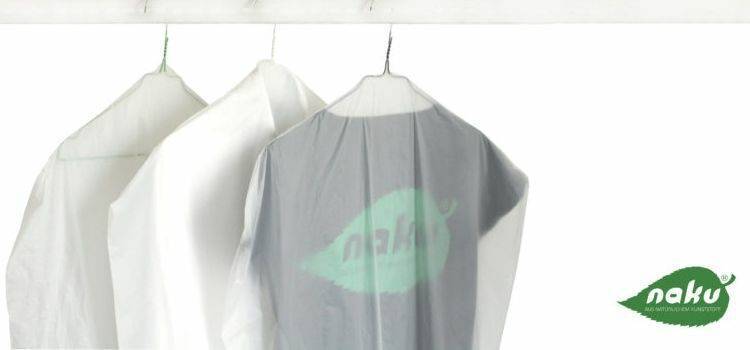
The new garment bag made of bioplastic – NaKu stops the flood of petroleum-plastic!
NaKu stops the flood of petroleum-plastics with the garment bag made of bioplastic!
The latest product from NaKu is the special NaKu garment bag made from natural plastic for dry cleaning, dry cleaning and laundries. Environmentally friendly packaging is already a feature of many sectors - the Austrian plastic bag ban regulates this, for example, for bags that are handed out to end consumers in trade and commerce. Only very light carrier bags made of bioplastics that are biodegradable/compostable are allowed here.
The new NaKu garment bag made from bioplastics is the Austrian and green option for all dry cleaners who do not want to cover laundry with plastic and petroleum.
With the NaKu clothes bag made of bioplastics, dry cleaners can make a significant contribution to environmental protection. The clothes bags are - typical for NaKu - made of natural and rapidly renewable raw materials, 100% compostable and free of harmful substances and heavy metals. In addition, they are more climate-friendly than garment bags made of conventional (petroleum) plastic. By switching to the NaKu garment bags, dry cleaners and dry cleaners are making a significant contribution to our common environment and thus also against the flood of dangerous microplastics entering our floors!
We look forward to your recommendation and your inquiry!
FAQ – Frequently asked questions about the NaKu Bio-garment bag made of bioplastic
What is NaKu's latest product and who is it aimed at?
NaKu's latest product is a special garment bag made of bioplastic, aimed at dry cleaners, dry cleaners, and laundries.
What are the advantages of the new garment bag?
The garment bag is an environmentally friendly alternative to conventional petroleum-based plastic bags because it is made from natural plastic.
What contribution does the new garment bag make to environmental protection?
By using the bioplastic garment bag, dry cleaners can protect the environment and significantly reduce the amount of permanent microplastics that can enter the soil.