Stop climate change: How to achieve truly sustainable forest conversion
Why reforestation is more important today than ever before
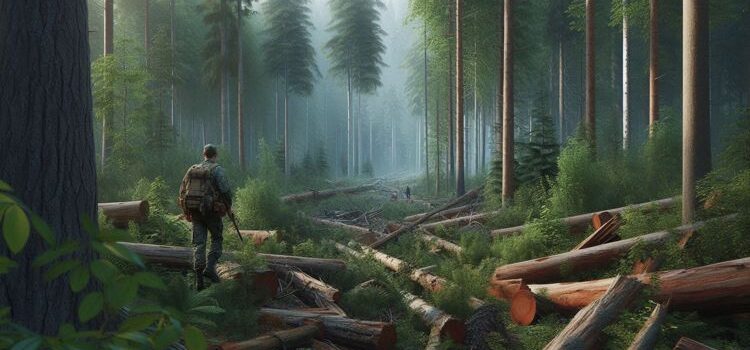
Reforestation: Our forests are changing. Extreme climatic events such as heat waves, storms, and droughts are taking a heavy toll. Monocultures like spruce stands are particularly affected, as they offer little resistance to new environmental conditions. Bark beetles are spreading rapidly due to mild winters, destroying entire forest areas. Windthrow events are increasing because soils are drying out and the stability of trees is decreasing. At the same time, the social and ecological value of the forest is growing: as a carbon sink, habitat for biodiversity, water reservoir, and recreational area.
Reforestation as a response to climate change
The forests must adapt to new conditions. This means:
- forest conversion: Away from monocultures and towards mixed forests with climate-resistant species such as oak, beech or Douglas fir.
- Pest managementBark beetles and other insects are spreading due to mild winters and require new strategies.
- Windthrow preventionMore stable tree species and planting methods increase stability.
- Fire resistanceMixed forests are less susceptible to forest fires and promote self-regeneration.
The combination of reforestation, forest conversion, and targeted tree protection is crucial for making our forests sustainable for the future. New, innovative materials also play a key role in this.
Reforestation is therefore not only a reaction to forest loss, but also an active measure for climate adaptation and ecological stabilization. It pursues several goals:
- KohlenstoffbindingForests are natural carbon sinks. One hectare of mixed forest can bind tons of CO₂ annually.
- Climate adaptationNew forests with climate-resilient tree species help to mitigate the effects of extreme weather.
- BiodiversityReforestation creates habitats for animals and plants.
- water ResourcesTrees stabilize soils and promote water infiltration.
- Social benefitForests offer recreational areas, improve air quality and promote health.
But reforestation alone is not enough. The young trees must be protected – from browsing animals, competing vegetation, and mechanical damage. This is where tree protection sleeves come into play.
Why young trees need protection
Trees are particularly vulnerable in the first few years after planting. Without protection, they are exposed to numerous dangers:
- Damage caused by deer and stags
- Rubbing damage caused by antler abrasion
- Competing vegetation that steals light and nutrients
- Late frost damages shoots
- Mechanical damage caused by maintenance work or tourism
Tree protection sleeves offer an effective solution. They create a microclimate, promote growth, and significantly increase the survival rate of young trees. Studies show that trees with sleeves have higher survival rates and grow faster.
Material comparison: What tree protection sleeves are available for reforestation?
Petroleum-based plastics (PE, PP, PVC)
These materials are widely used and offer robust, durable solutions. They reliably protect against browsing damage and weathering and are reusable if handled carefully. However, their environmental impact is problematic: they are not biodegradable and often remain in the forest. Studies show that many of the covers are not collected. Over time, they break down into microplastics, which harm soil organisms and enter the food chain. Disposal is complex and expensive.
Wood growth sleeves
These tree covers are made of pressed wood fibers and offer a biodegradable alternative. They can be produced regionally, are stable, and do not release microplastics. Their lifespan is approximately five years. However, the price is significantly higher than that of plastic covers, which limits their use on large areas. Furthermore, they are not suitable for all tree species.
Natural materials (jute, cotton, cardboard)
These materials are more environmentally friendly. They do not produce pollutants and are easy to dispose of. Their disadvantages lie in their low weather resistance and mechanical stability. They are particularly suitable for temporary applications or in combination with other protective measures.
Bioplastics (e.g. PLA, sugar, starch)
Bioplastics offer an innovative solution that balances functionality and environmental friendliness. They are bio-based and industrially compostable according to DIN 13432. No permanent microplastics are produced during decomposition. However, degradation in forests is slower than in composting facilities. They are more expensive than petroleum-based plastics but less expensive than wood-based alternatives. They are particularly suitable for areas where the removal of packaging materials cannot be guaranteed.
Conclusion: Sustainable forest protection begins with the tree.
The challenges facing our forests are significant – but the solutions are within reach. With reforestation, climate-adapted forest conversion, and innovative materials like the stronger NaKu biopolymer film , on which these novel tree protection sleeves are based, we can not only protect the forest but also actively shape it. A forest that sequesters CO₂, promotes biodiversity, and serves as a habitat for future generations. You can find other products for the forestry industry, such as loop labels made of bioplastic, here.
FAQ – Frequently asked questions about tree protection sleeves and reforestation
Why is reforestation particularly important today?
Reforestation helps to regenerate forests damaged by climate change, to bind CO₂, to promote biodiversity and to increase resilience to extreme weather.
What dangers threaten young trees after planting?
Young trees are vulnerable to browsing by wild animals, rubbing damage, frost, competing vegetation, and mechanical damage. Without protection, their survival rate drops significantly.
What are tree protection sleeves and how do they work?
Tree protection sleeves are physical barriers that protect young trees from external influences. They create a microclimate, promote growth, and prevent damage from animals and weather.
What materials are used for tree protection sleeves?
Common materials include petroleum-based plastics, wood fiber, natural materials such as jute, and modern bioplastics such as PLA films.
What are the disadvantages of plastic casings made from petroleum?
They are not biodegradable, often remain in the forest and break down into microplastics, which pollute soils and ecosystems in the long term.
What makes NaKu's biopolymer film particularly sustainable?
It consists of sugar and cornstarch, is industrially compostable, free of pollutants and does not cause permanent microplastics, even if it remains in the forest.
Can bioplastic casings simply decompose in the forest?
Degradation is slower than in composting facilities, as they also need to be durable for a certain period of time, but significantly more environmentally friendly than petroleum-based plastics. Collection is still recommended, however.
How does reforestation contribute to climate adaptation?
By selectively choosing climate-resistant tree species and mixed forests, resistance to windthrow, drought and pest infestation is increased.
What is forest conversion and how is it related to reforestation?
Forest conversion refers to the transformation of existing forests into climate-adapted mixed forests. Reforestation complements this process through new plantings on open areas.
For which forestry operations is the biopolymer film particularly suitable?
Ideal for companies that are reforesting in hard-to-reach areas or implementing projects where the retrieval of the shells cannot be guaranteed.
Request a quote or contact us now