
15 years of NaKu – 15 years of bioplastics
From pioneer and visionary to the Energy Globe Award – 15 years of NaKu
How it all began - the first thoughts
When the children of Ute and Johann Zimmermann were still small (Moritz is now in the middle of high school, Johann Jr. is already studying), the parents had to justify how much single-use plastic is actually disposed of with the waste in a family of four and why everyone is participating in a system that is so clearly going in the wrong direction. So the search began to see if there really was no alternative.
As early as 1999/2000, Johann Zimmermann dealt with the then new plastic (bioplastic based on lignin) for the first time. Both Zimmermanns were fascinated that there is a 100% bio-based renewable material, even if it stunk and stuck and it was difficult for specialists to get anything out of the machine.
The path to self-employment and founding a company
Since 1994, Ute and Johann Zimmermann have always wanted to start their own company. The decisive factor in finally taking this step was a few impulses from friends and Johann Zimmermann's boss at the time, who knew about this long-standing wish.
Finding the name and the first product
No sooner said than done - the question now arose as to what the company should be called at all? Ute and Johann Zimmermann decided very early on to use the core term "natural plastic" - today's short form "NaKu" - because organic was too inappropriate for them. At that time there was no clear classification of bioplastics and no definition of how these plastics should be called.
The name was found, now only a first product made of bioplastic had to be developed. In short – the NaKu-Sackerl, which is known today, was born. In the course of the following years, more and more new bags made of bioplastics were added to this first variant. On the one hand as an organic carrier bag in different sizes and thicknesses, on the other hand for special purposes in the household such as the organic freezer bag, the organic fresh-keeping bag or the organic garbage bag. Innovations such as the garment bag made from bioplastics for cleaning shops or the NaKu planting bag followed.
The first years
It's not always easy to be a visionary and pioneer. The years up to 2017 were challenging for NaKu. NaKu was repeatedly attacked with the same arguments: Bioplastics are not organic at all, bioplastics are not renewable raw materials. NaKu is just greenwashing. Bioplastic is made from genetically modified plants, etc.
There was a lot of resistance to this new material, especially in the plastics industry. Even if the general public has never seen it so black and white, but more as gray, the question was very quickly asked within the plastics industry: If THE people at NaKu make the good plastic, then what do we do? But there were other reservations about bioplastics as well. Ute Zimmermann reports: “The use of biodegradable products requires that you deal with product consequences. It assumes how seriously I take sustainability. For me, is it a fig leaf for better marketing, or is it part of my corporate philosophy.”
Johann Zimmermann says from experience and many conversations: “The price was and is the main reason for deciding against a product made of natural plastic. If our materials cost the same as conventional PET, it would be obvious for our customers to opt for the bio variant. This also ensured that many people with whom we developed products together made different decisions.”
With perseverance and trust in your own products to success
But it wouldn't be Johann and Ute Zimmermann if they had let this headwind stop them. The products already mentioned were persistently developed, followed by recyclable and compostable bottles made of PLA.
A study on the freshness-preserving function of NaKu bags was conducted at BOKU Vienna as early as 2009, and it was proven that food stays fresh longer – a topic that is more relevant than ever nowadays in terms of food waste.
In the years that followed, many prizes were won for NaKu products made from bioplastics, such as Genius, Clusterland Award, ÖGUT environmental prize, Lower Austrian innovation prize, DAPHNE environmental technology prize, and many more. mentioned.
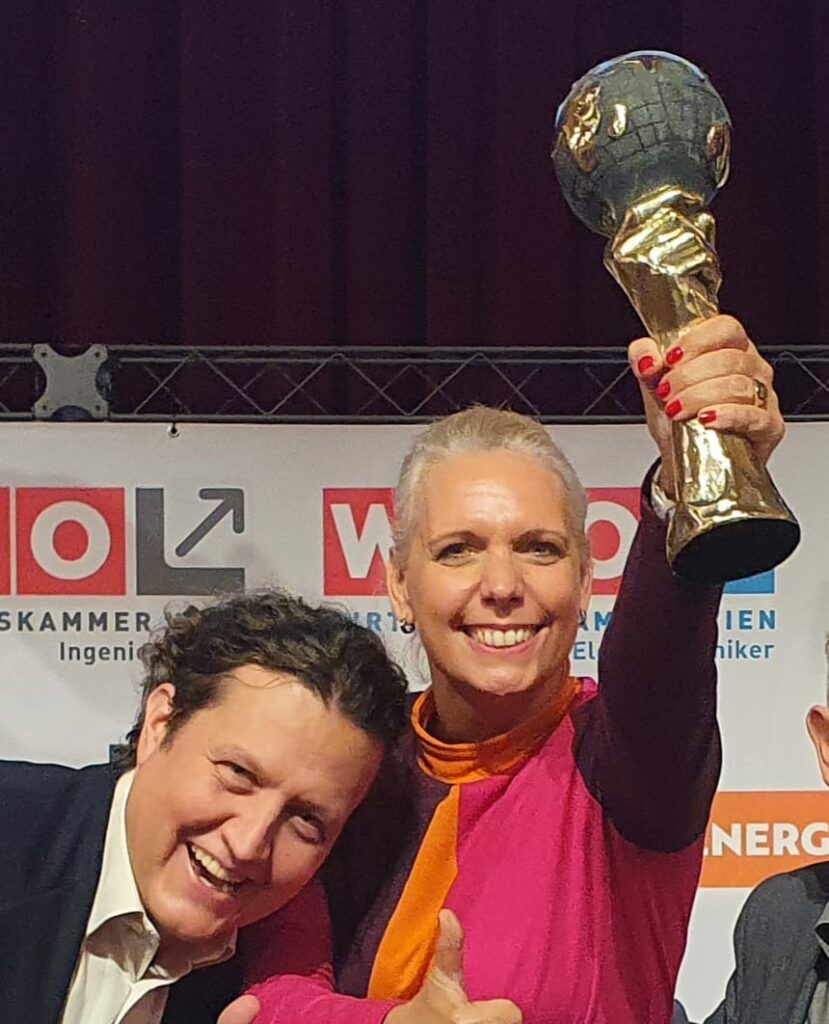
The “crowning achievement” was the victory in 2021 at the Energy Globe Award Austria in the category of soil with the NaKu planting bag made of bioplastic, which was developed together with the HBLFA Horticulture Schönbrunn for the Book for Trees project in Kenya.
NaKu in the Corona years
The past few years, dominated by the pandemic, have presented a significant challenge for every company. NaKu, however, used this time for intensive new product development and customer projects. One particularly technically challenging customer project was the bioplastic replacement cartridge for a sustainable, reusable jar (made of wood and glass) for the natural cosmetics of freemee cosmetics. Furthermore, NOT PLASTIC WATER was developed in collaboration with WILDALP . This unique product, spring water from the Gesäuse region, is bottled in a special NaKu PLA bottle , making plastic-free drinking water a reality for the first time.
And so it continues
Johann and Ute Zimmermann have been giving lectures on bioplastics at universities, schools, and conferences for many years. Sharing their extensive knowledge of bioplastics and raising awareness is particularly important to them. Meanwhile, counterfeit bioplastic bags are increasingly appearing on the market – a clear case of deception by retailers who, due to the plastic bag ban, are only permitted to sell lightweight and biodegradable carrier bags made of bioplastic. Here, too, education and information are needed, and corresponding informational videos have been produced.
Very intensive work is being done on the NaKu Double Loop and on positioning bioplastics and their recyclability better. Previous test runs to recycle bags made of bioplastics have been positive. The first test productions with already recycled PLA for bottles were also promising.
“For us, the combination of nature and technology is not a contradiction, but an important basis for our work. The organic idea should not stop at the packaging and waste should remain in the generation that causes it.
After all, plastic can also be natural.”
DI Johann Zimmermann
FAQ – Frequently asked questions about NaKu
Who founded NaKu and how did it come about?
NaKu was founded by Ute and Johann Zimmermann. The idea arose when the family reflected on their own consumption of single-use plastic and sought an alternative.
What does the name “NaKu” mean?
"NaKu" is the abbreviation for "natural plastic." The name was chosen because the founders felt the term "organic" was too vague.
What was NaKu's first product?
NaKu’s first product was the now well-known fresh-keeping bag.
What challenges did NaKu have to face in the first years?
In the early years, there was a lot of opposition from the conventional plastics industry, which questioned its compostability. The higher price compared to conventional plastics was also a hurdle.
Which scientific study confirmed the effectiveness of NaKu products?
A 2009 study by BOKU Vienna confirmed the freshness-preserving function of NaKu bags.
Has NaKu received any awards for its products?
Yes, NaKu has received many awards for its products, including the Energy Globe Award Austria in the soil category for the NaKu planting bag.
What is special about the NaKu planting bag?
The planting bag was developed in collaboration with the HBLFA Gartenbau Schönbrunn for a project in Kenya.
What new products were developed during the Corona years?
During this time, NaKu developed, among other things, a sustainable jar for natural cosmetics and a special PLA bottle for “NOT PLASTIC WATER”.
What is NaKu doing today to raise awareness about bioplastics?
The founders continue to engage in educational activities by giving lectures and working intensively on the recycling of bioplastics.
What is NaKu’s future vision?
NaKu is working on promising recycling methods for bioplastics to further advance its vision of a sustainable plastic alternative.


